Filipino Chicken Adobo
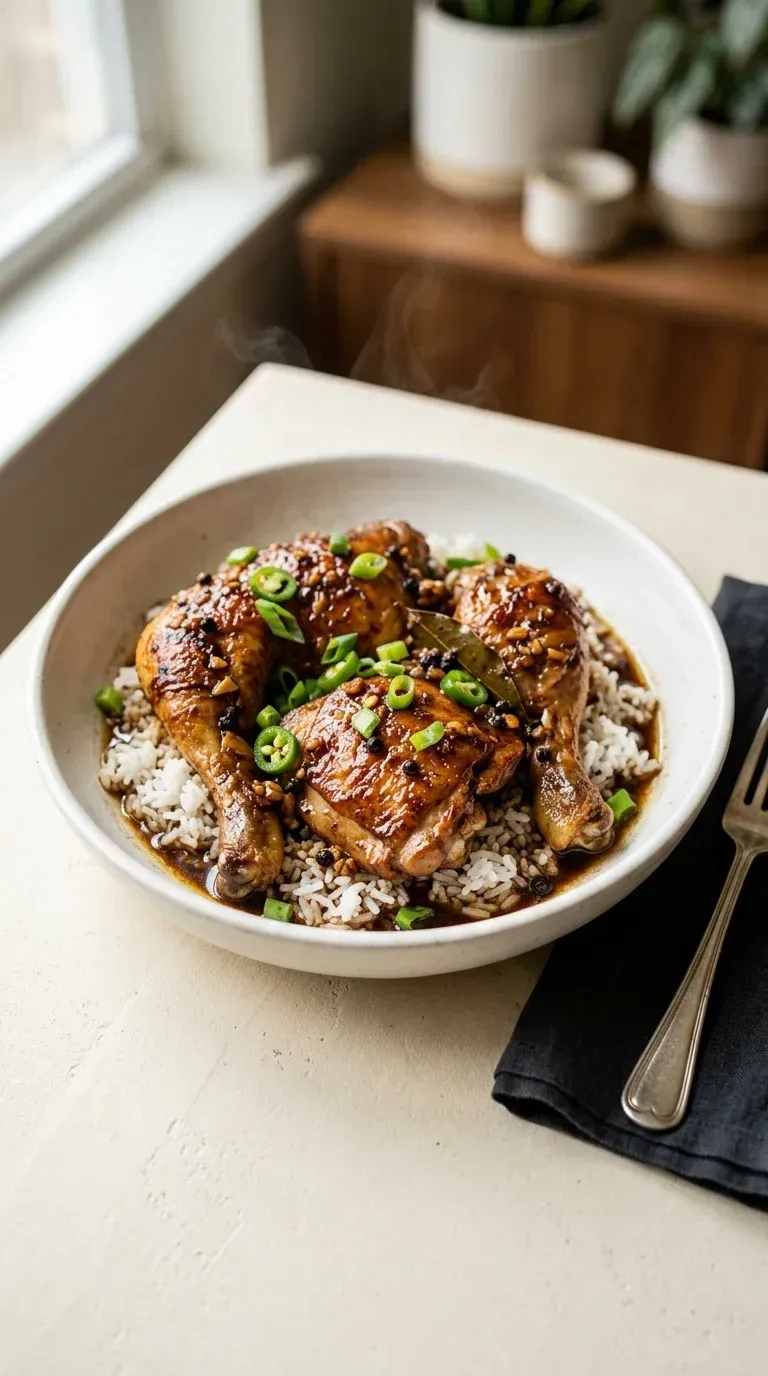
Tangy, salty, and deeply comforting. This classic braise turns simple ingredients into a rich dinner masterpiece. Perfect served over a cloud of steamed jasmine rice.
- Amelia Rose
- Warm Meals
- September 4, 2026
- 4 min read
- Updated November 5, 2026
- Total time
- 1 h
- Servings
- 6 Servings
- Difficulty:
- Easy
Table of contents
You know, there is something about the smell of garlic and vinegar hitting a hot pan that just settles the soul. I remember when I first started making this for my family; I was always so worried about getting the balance just right, but honestly, it's the kind of dish that teaches you to trust your instincts. It's just so patient, you know? The way the chicken slowly softens in that pan while the house starts to smell like a proper Sunday dinner.
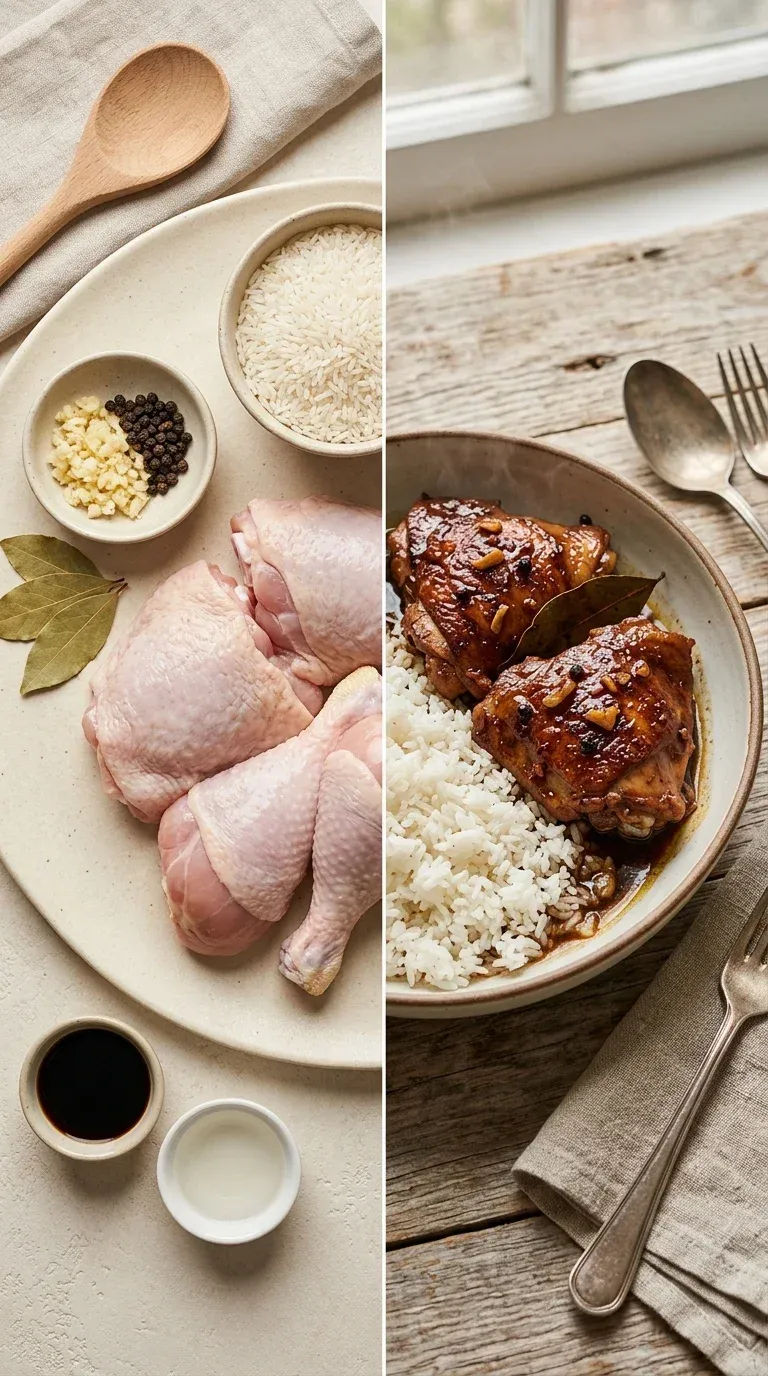
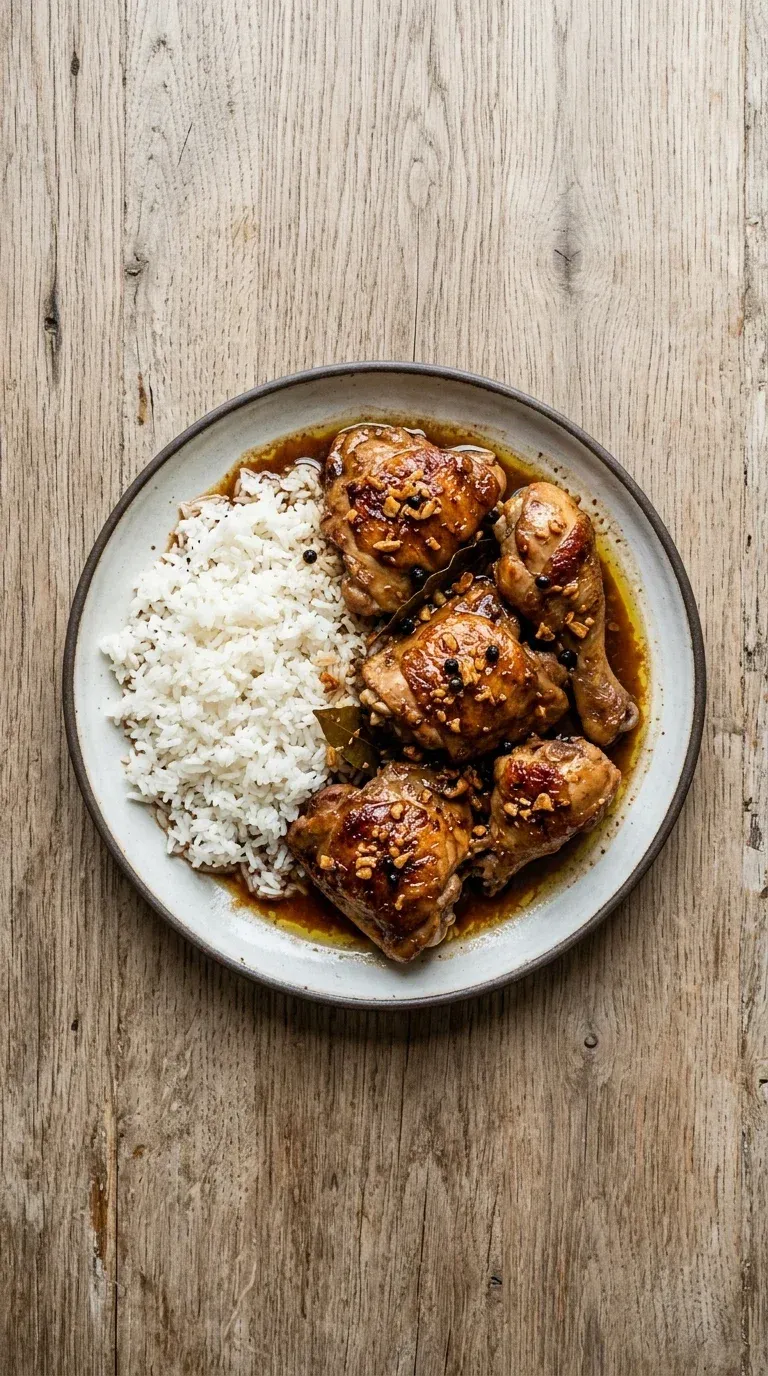
Well, look, it isn't fancy, and that's exactly why I love it. It's just bone-in, skin-on chicken thighs, soy sauce, white vinegar, and a few bay leaves doing all the heavy lifting. I mean, when you see that sauce start to reduce and turn into a glossy glaze, it's just... wow. It's a moment of pure magic in a simple pot.
So, whether you've had a long day or you're just looking for something that feels grounded and real, this Filipino chicken adobo is the answer. Just take your time with it. Let the flavors meld. It's worth every minute of the wait, I promise.
The story behind it
Filipino chicken adobo is more than just a recipe; it is a reflection of the Philippines' complex history and resourceful spirit. The word "adobo" comes from the Spanish word "adobar," meaning to marinate, but the practice of preserving meat in vinegar dates back to indigenous Filipino cooking long before Spanish colonization. The acidity of the vinegar acted as a natural preservative in the tropical heat, keeping the meat safe and flavorful.
Over centuries, the dish evolved as trade brought soy sauce from China, adding a deep, salty umami layer to the tangy base. This fusion created the iconic balance of salty and sour that defines the modern version of the meal. Each household often has its own secret variation—some adding a bit of brown sugar for sweetness, others preferring a heavier hand with the peppercorns.
Today, the dish stands as an unofficial national treasure, representing the heart of the Filipino home. Its enduring popularity lies in its versatility and the comforting, nostalgic feeling it evokes. From the rustic kitchens of the provinces to modern city tables, it remains a symbol of heritage and hospitality.
Why You'll Love It
- Honestly, there is just something about that glossy sauce that feels like a warm hug on a rainy afternoon.
- I love how the 2 lbs bone‑in, skin‑on chicken thighs get so tender they almost fall apart, just the way it should be.
- Well, the balance of the soy sauce and white vinegar is just magic, giving you that tangy, savory depth that makes your mouth water.
- It's such a grounded, simple meal, and wow, the smell of garlic and bay leaves filling the kitchen always brings back the best memories.
Tips for success
- Marinate for Depth, If you have the time, marinate the chicken in soy sauce, vinegar, and garlic for 1–2 hours first.
- Sugar Choice, Using demerara or cane sugar instead of regular brown sugar gives a richer caramel note.
- Adding Heat, A pinch of sweet paprika or red chili flakes at the end adds a mild kick without losing the classic taste.
Professional secrets
- The skin-side down sear creates a Maillard reaction that adds umami depth to the final sauce.
- Balanced Acidity, The ratio of vinegar to soy sauce is key; adjusting with a pinch of sugar at the end perfects the tang.
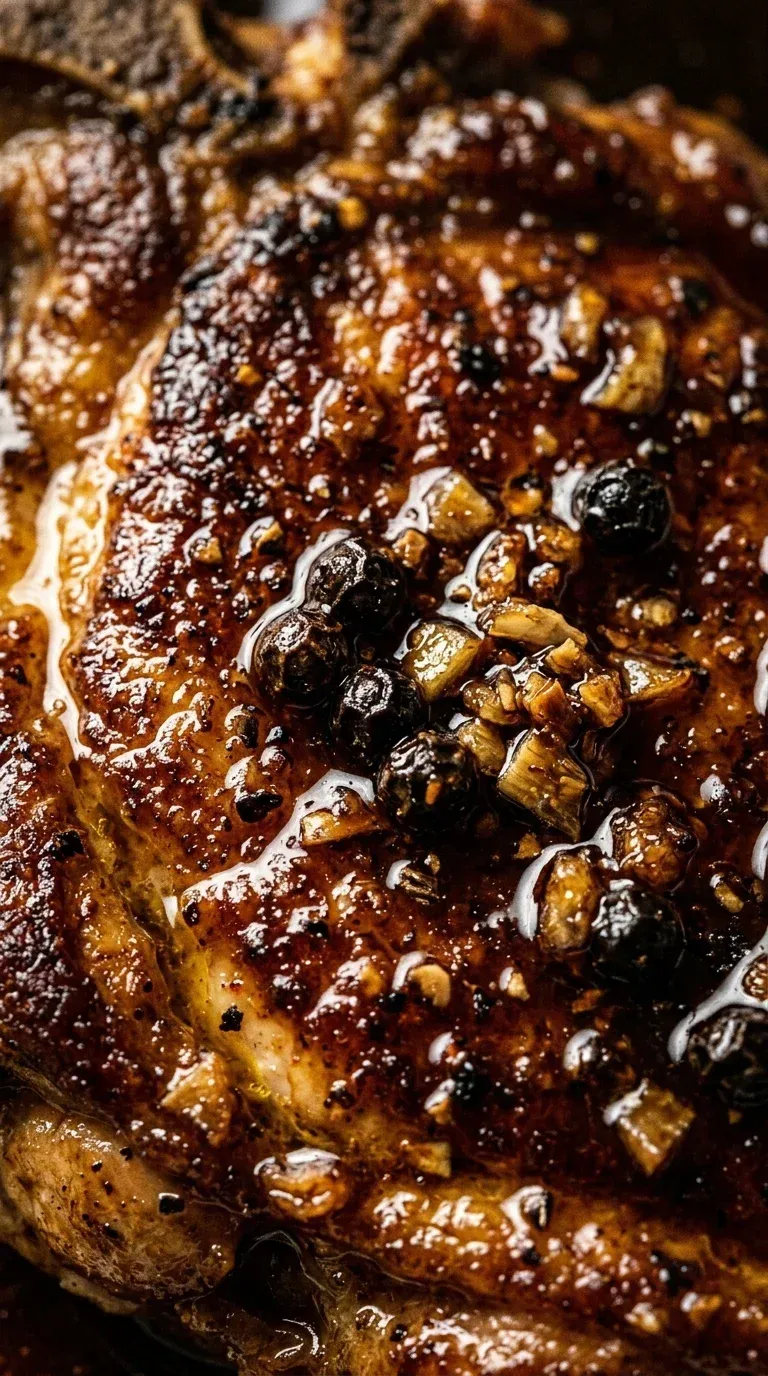
- Glaze Reduction, Increasing the heat at the final stage transforms a thin braising liquid into a restaurant-style glaze.
Common mistakes to avoid
- Adding too much salt before tasting the reduced sauce, which is naturally salty from the soy.
- Crowding the pan during the searing phase, which prevents the chicken from getting a golden crust.
- Rushing the reduction phase, resulting in a thin soup rather than a glossy glaze.
Substitutions
- brown sugar: honey. Adds a floral sweetness and helps the glaze thicken.
- white vinegar: apple cider vinegar. Results in a slightly fruitier, milder tang.
- soy sauce: coconut aminos. A great soy-free alternative, though you may need a pinch more salt.
Variations
- Spicy Filipino Chicken Adobo: For those who like a little heat, stir in 1–2 tsp of toasted red pepper flakes or sliced fresh chilies while the chicken is simmering.
- Vegetable Adobo (Tocino‑style): You can replace the chicken with marinated tofu for a vegetarian version; just be careful to adjust the cooking time so the tofu doesn't get too mushy.
Storage
Store in a sealed container in the fridge for up to 3 days, or freeze for up to 4 weeks.
Make ahead
This dish is actually better the next day. You can cook it fully, store it in the fridge, and the flavors will continue to deepen overnight.
Leftovers
Keep leftovers in a sealed container for up to 3 days. Thaw frozen portions overnight in the fridge and reheat gently on the stove with a splash of water.
Serving ideas
- Served over steamed jasmine rice for a classic experience.
- Accompanied by stir-fried bok choy for a bit of color and freshness.
- Topped with golden fried garlic chips for a professional touch.
- Garnished with freshly chopped cilantro and scallions for a pop of brightness.
Allergy information
Contains Soy. Naturally Dairy-Free and Gluten-Free if using certified GF soy sauce.
Filipino Chicken Adobo
Tangy, salty, and deeply comforting. This classic braise turns simple ingredients into a rich dinner masterpiece. Perfect served over a cloud of steamed jasmine rice.
- Prep time
- 15 min
- Cook time
- 45 min
- Total time
- 1 h
- Difficulty
- Easy
- Cuisine
- Filipino
Ingredients
Main Ingredients
The Braising Sauce
Finishing Touches
Instructions
- 1
First things first, wash your 2 lbs bone‑in, skin‑on chicken thighs and pat them dry with paper towels—honestly, getting them dry is the secret to a good sear. While you're at it, mince the 6 cloves garlic and slice the 1 medium onion, then just set them aside for a moment.
- 2
Heat the 2 tbsp vegetable oil in your large pot over medium heat. Lay the chicken pieces skin‑side down; let them sizzle for about 4–5 minutes. You're looking for that beautiful, golden crust that makes the dish feel special.
- 3
Flip the chicken over. Now, toss in the minced garlic and that sliced onion if you're using it. Sauté for just 2 minutes until it smells wonderful and fragrant throughout the kitchen.
- 4
Pour in the 1/2 cup soy sauce, 1/2 cup white vinegar, and 1 cup water. Stir in the 3 bay leaves, 1 tsp whole black peppercorns, and 2 tbsp brown sugar. Give it a good stir and bring the whole thing to a gentle boil.
- 5
Turn the heat down to low and pop the lid on. Let it simmer quietly for 25–30 minutes. You want the chicken to be tender, but still holding its shape—not falling apart completely.
- 6
Take the lid off and bump the heat up to medium-high. We're going to let that liquid reduce and thicken into a glossy glaze. Stir it occasionally for about 5–7 minutes until it looks rich and syrupy.
- 7
Take a little taste of the sauce. If it feels too sharp, you can add a pinch of salt or a touch more sugar to balance out the acidity. It's all about your own preference, really.
- 8
Turn off the heat. Now, look, just let the adobo rest for 5 minutes so the flavors can really meld together. Transfer it to your favorite serving dish and garnish with some fresh cilantro or sliced scallions.
Nutrition per serving
- 420 kcal
- Calories
- 38 g
- Protein
- 12 g
- Carbs
- 24 g
- Fat
Tips & notes
- Allowing the sauce to reduce on medium-high heat is what creates that signature glossy glaze. - Patting the chicken dry ensures the skin browns properly rather than steaming. - The resting period at the end is a simple step that makes a big difference in depth of flavor.
Frequently asked questions
Can I use chicken breasts instead of thighs?
You can, but honestly, breasts can dry out so quickly. I really recommend the thighs for that melt-in-your-mouth texture.
What if the sauce tastes too sour?
Oops, happens to the best of us! Just stir in a tiny pinch more of that brown sugar to balance the acidity.
How do I store the leftovers?
Just pop them in a sealed container in the fridge for up to 3 days. It actually tastes even better the next day once the flavors have really sat.