
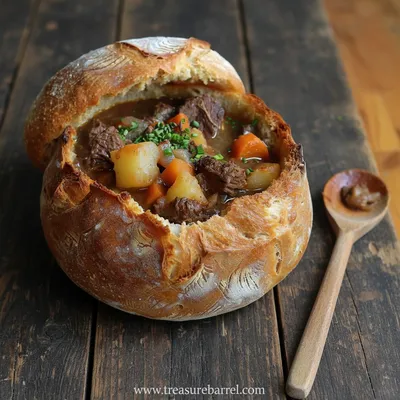
The tradition of serving stew in bread vessels dates back centuries to medieval times when trenchers – thick slices of stale bread – were used as edible plates. This practical approach to serving hearty meals evolved into the bread bowls we know today, perfect for containing rich, warming stews without wasting a single drop. The combination of tender beef and vegetables slow-cooked to perfection, served in a crusty bread vessel, creates a meal that satisfies both hunger and soul.
Why You'll Love It
-
The bread bowl becomes part of the meal – no dishes to wash
-
Slow-cooked beef becomes incredibly tender and flavorful
-
Perfect for using up winter root vegetables
-
Makes the house smell amazing for hours
"My family requests this every time the temperature drops. The bread soaks up all that wonderful broth – pure comfort!"
Essential Ingredient Guide
- Beef chuck roast: Choose well-marbled beef chuck – the fat melts during cooking, keeping the meat tender and adding richness to the broth
- Round bread bowls: Look for sturdy, crusty rounds that can hold up to the stew without getting soggy too quickly
- Carrots and potatoes: Cut them into similar-sized pieces so they cook evenly and create a balanced texture
- Beef broth: A good quality broth makes all the difference – it's the foundation of your stew's flavor
- Tomato paste: Adds depth and a slight acidity that balances the richness of the beef
- Fresh thyme: The earthy, slightly minty flavor complements the beef beautifully without overpowering it
 Family Favorites
Meat Lovers Pizza Casserole Recipe
A comforting baked dish that brings pizza night flavors together in one easy casserole.
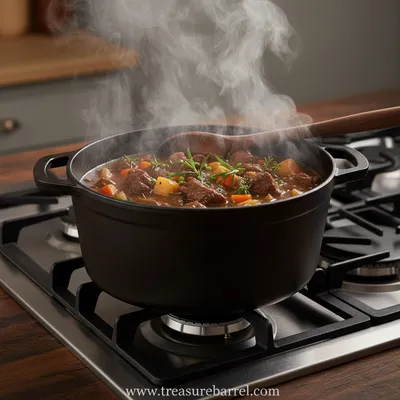
Complete Cooking Process
-
Ingredient Readiness:
Pat the beef dry with paper towels – this helps it brown properly. Cut all vegetables into uniform chunks so they cook at the same rate. Have your broth measured and herbs ready to go.
-
Flavor Development:
Browning the beef in batches creates fond – those browned bits at the bottom of the pot that add incredible depth. The tomato paste cooked with the onions and garlic caramelizes, adding sweet notes.
-
Texture Control:
Simmering gently rather than boiling keeps the beef tender. The potatoes should be soft but not falling apart, and the carrots should still have a slight bite.
-
Finishing Touches:
Stirring in the peas at the end keeps them bright green and fresh-tasting. A final sprinkle of fresh parsley adds color and freshness.
-
Serving Timing:
Serve immediately after ladling into warm bread bowls so the bread softens just enough to be edible but still holds its structure.
-
Don't rush the browning – it's worth the extra minutes
-
Use a slotted spoon to fill bowls to control broth amount
-
Save the bread tops for dipping
-
Let the stew rest 10 minutes before serving for flavors to meld
Pro Tips
I remember making this for my son's hockey team one bitter cold Saturday. The pot was practically licked clean, and those boys looked so satisfied, their cheeks still pink from the ice.
Honestly, the best part is watching people's faces when they break through that bread crust into the steaming stew beneath. It's one of those meals that just feels right, you know?
 Warm Meals
Beef Ragu Pasta Recipe in Tomato Sauce
A rich and hearty pasta dish with slow-cooked beef ragu in a savory tomato sauce.
The essence of the dish:
What makes this special is how the bread bowl becomes part of the experience – tearing off pieces to scoop up the stew, the way the broth soaks into the bread's interior, creating this wonderful texture contrast between crusty exterior and soft, stew-soaked interior.
A fun fact or historical angle:
In the Middle Ages, trenchers – the ancestors of bread bowls – were considered a sign of status. The richer the household, the finer the bread used for these edible plates.
Flavor or sensory focus:
You'll notice the deep, beefy aroma first, then the tender texture of the meat against the soft vegetables, and finally the way the bread adds its own yeasty notes to each spoonful.
You Must Know
-
Patience with browning equals flavor payoff
-
Choose bread bowls with thick, sturdy walls
-
Don't skip deglazing the pan – that's pure flavor
-
Let the stew rest before serving for best texture
Frequently Asked Questions
→ Can I make this stew ahead of time?
Absolutely. In fact, stew often tastes better the next day as flavors have more time to meld. Just store it separately from the bread bowls and reheat gently before serving.
→ What type of bread works best for bowls?
You want a crusty, dense bread like sourdough or a sturdy round loaf. Avoid soft sandwich breads as they'll get too soggy too quickly.
→ Can I use a different meat?
Sure, lamb works wonderfully too – just adjust cooking time as needed. For a quicker version, you could use pre-cut stew meat.
→ How do I prevent the bread from getting soggy?
Serve immediately after filling, and don't overfill the bowls. Some sogginess is part of the experience, but you want the bowl to maintain its structure.
→ Can I freeze the leftover stew?
Yes, it freezes beautifully for up to 3 months. Thaw overnight in the refrigerator and reheat gently on the stove.
→ What vegetables can I add or substitute?
Turnips, parsnips, or celery root would work well. Just ensure they're cut to similar sizes for even cooking.
Nutrition Facts
per serving
580
Calories
38g
Protein
55g
Carbs
22g
Fat
Taste Profile
Rich, savory depth with earthy herbal notes and subtle sweetness from vegetables
Ingredient Substitutions
Don't have an ingredient? Try these alternatives
Cooking time may need adjustment based on cut used
Adds similar acidity without alcohol content
Recipe Variations
Try these delicious twists on the original
Vegetable-Heavy Version
Add mushrooms, celery, and parsnips along with the carrots and potatoes for extra vegetable variety
Herb-Forward Version
Use rosemary and sage in addition to thyme for a more aromatic stew
Common Mistakes to Avoid
Learn from others' mistakes for perfect results
- Overcrowding the pan when browning beef – this steams rather than browns
- Boiling the stew instead of simmering – makes meat tough
- Adding all vegetables at once – root vegetables need different cooking times
- Skipping the bread warming step – cold bowls cool the stew too quickly
Meal Prep & Storage
Make Ahead Tips
The stew can be completely prepared up to 3 days in advance and refrigerated. Flavors actually improve with time. Reheat gently on the stove before serving.
Leftover Ideas
Leftover stew (without bread) reheats beautifully. Add a splash of broth when reheating as it thickens when cooled. The bread bowls don't keep well once filled.
Perfect Pairings
Serve this with...
Cooking Timeline
Prep all ingredients – cube beef, chop vegetables, measure liquids
Brown beef in batches, sauté aromatics
Simmer stew with beef until starting to tenderize
Add vegetables, continue simmering until tender
Warm bread bowls, finish stew with peas
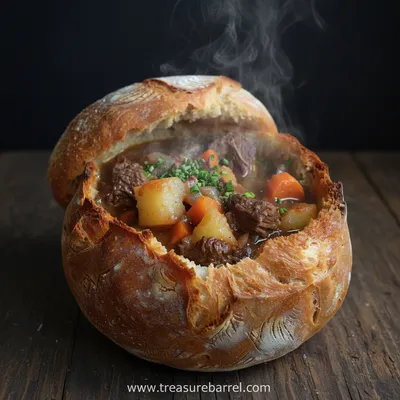
Beef Stew in a Bread Bowl Recipe
A soul-warming beef stew nestled in a freshly baked bread bowl – the kind of meal that makes you forget about the cold outside.
Timing
Prep Time
30 Minutes
Cook Time
2 Hours 30 Minutes
Total Time
3 Hours
Recipe Details
Ingredients
For the Stew
-
01
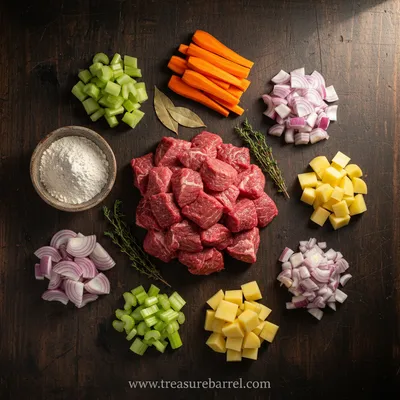
2 lbs beef chuck roast, cut into 1-inch cubes
-
02
2 tbsp olive oil
-
03
1 large onion, chopped
-
04
3 cloves garlic, minced
-
05
3 tbsp tomato paste
-
06
4 cups beef broth
-
07
1 cup red wine (optional – substitute with additional broth)
-
08
1 lb potatoes, peeled and cubed
-
09
3 carrots, peeled and sliced
-
10
2 bay leaves
-
11
1 tsp fresh thyme leaves
-
12
1 cup frozen peas
-
13
Salt and black pepper to taste
For Serving
-
01
6 round bread bowls
-
02
Fresh parsley for garnish
Instructions
Pat the beef cubes dry with paper towels and season generously with salt and pepper. Heat 1 tablespoon of olive oil in a large Dutch oven or heavy pot over medium-high heat. Working in batches, brown the beef on all sides, about 5-7 minutes per batch. Don't overcrowd the pan – this is crucial for proper browning. Transfer browned beef to a plate.
Add the remaining olive oil to the pot. Add chopped onion and cook until softened, about 5 minutes. Add garlic and cook for another minute until fragrant. Stir in tomato paste and cook for 2 minutes, stirring constantly – it will darken slightly and smell sweet.
Return the beef to the pot along with any accumulated juices. Pour in beef broth and scrape the bottom of the pot to release all those browned bits – this is where so much flavor comes from. Add bay leaves and thyme.
Bring to a simmer, then reduce heat to low, cover, and let it cook gently for 1.5 hours. The beef should be starting to tenderize but not quite done yet.
Add potatoes and carrots to the pot. Continue simmering, covered, for another 45 minutes to 1 hour, or until both beef and vegetables are tender.
Stir in frozen peas and cook for 5 more minutes. Remove bay leaves. Taste and adjust seasoning with salt and pepper.
While the stew finishes, preheat your oven to 350°F. Cut the tops off the bread bowls and hollow out some of the soft interior bread, leaving about a 1-inch thick shell. Place bowls and lids on a baking sheet and warm in the oven for 5 j8-10 minutes until slightly crisp.
Ladle the hot stew into the warm bread bowls, garnish with fresh parsley, and serve immediately with the bread lids on the side for dipping.
Notes & Tips
-
1
Stew can be made up to 3 days ahead and refrigerated
-
2
Freeze leftover stew for up to 3 months
-
3
Save the bread you remove from the bowls for breadcrumbs or croutons
-
4
The stew thickens as it cools – add a splash of broth when reheating if needed
Tools You'll Need
-
Large Dutch oven or heavy pot
-
Cutting board
-
Sharp knife
-
Measuring cups and spoons
-
Wooden spoon
-
Ladle
-
Baking sheet
Must-Know Tips
-
Brown the beef in batches – overcrowding steams instead of browns
-
Don't skip scraping the fond from the pan bottom – that's flavor gold
-
Let the stew rest 10 minutes before serving for flavors to settle
-
Choose bread bowls with thick, sturdy walls to hold the stew
Professional Secrets
-
Pat meat dry before browning for better crust
-
Cook tomato paste with aromatics to deepen flavor
-
Simmer gently rather than boil to keep meat tender
-
Add delicate vegetables like peas at the very end

Recipe by
Amelia RoseAmelia cooks hearty meals 🥘🔥, sharing warmth 💛 and cozy evenings 🕯️🍲. Every dish she makes is full of love ❤️ and family laughter 👩👩👧👦🍛.
Get Delicious Recipes Weekly
Join 25,000+ home cooks getting our best recipes straight to their inbox.
Free forever • No spam • Unsubscribe anytime