
Chicken Dum Biryani Recipe
A slow-cooked, layered chicken and rice dish bursting with aromatic spices.
- Amelia Rose
- Warm Meals
- January 26, 2026
- 4 min read
- Updated November 5, 2026
- Total time
- 1 h 30 min
- Servings
- 6 Servings
- Difficulty:
- Medium
Table of contents
There’s something truly special about a dish that takes its time. Honestly, when the scent of warm spices starts to fill the kitchen, it feels like the whole world slows down just a little bit. This chicken dum biryani is one of those meals that asks for patience and gives back so much comfort in return.
The essence of the dish
It’s all about the layers and the slow infusion of flavor. It’s not a rushed meal; it’s a ritual. The careful building of rice, chicken, herbs, and spices, then the patient wait as everything melds together into something greater than the sum of its parts.
A fun fact or historical angle
The dum style of cooking is said to have been invented to allow army cooks to prepare nutritious meals for soldiers without the constant attention of a regular fire. It was a practical solution that turned into a culinary art form.
Flavor or sensory focus
The first thing you'll notice is the incredible scent—warm, floral, and spicy all at once. Then, when you take a bite, you get the tender chicken, the fluffy rice, the burst of sweet onion, and the lingering heat of the spices.
You Must Know
- Marinating the chicken for at least 2 hours, or even overnight, is non-negotiable for depth of flavor.
- The rice must be par-boiled, meaning it's about 70% cooked, before layering.
- The weight on the lid or the dough seal is crucial to creating enough pressure for proper steaming.
Look, I’ve made this recipe more times than I can count, and the one thing I’ve learned is to not cut corners. The steps are there for a reason. Each one builds on the last to create that final, spectacular result.
When you serve it, and you see everyone’s eyes light up, you’ll know it was worth every minute. It’s a dish that demands your attention but rewards you with pure comfort. It pairs wonderfully with something cool and creamy on the side, like a simple dip, to balance the spices.

The story behind it
Dum biryani has roots that stretch back to the Mughal era, where it was a feast fit for royalty. The term 'dum' refers to the slow-steaming technique that cooks the rice and meat together in a sealed pot, allowing the flavors to meld and intensify. This method was perfected in the royal kitchens of India, creating a dish where every grain of rice absorbs the rich essence of the spices and tender chicken. It’s a culinary tradition that turns simple ingredients into something truly majestic.
Why You'll Love It
- The slow-cooking method makes the chicken incredibly tender.
- Every grain of rice is infused with rich, aromatic spices.
- It’s a complete, satisfying meal all in one pot.
- The scent that fills your home is absolutely heavenly.
Tips for success
- Don't overcook the rice initially, it will finish cooking with the steam.
- Let the biryani rest after cooking, this allows the steam to redistribute.
- Taste the marinade before adding chicken, adjust salt and spice to your liking.
Professional secrets
- Room temperature yogurt marinates more evenly.
- High heat for searing the chicken locks in juices.
- Deglaze the pot after searing chicken with a splash of water for extra flavor.
Common mistakes to avoid
- Overcooking the rice during par-boiling, leading to a mushy final texture.
- Not sealing the pot properly, which lets the essential steam escape.
- Crowding the chicken while searing, preventing a good sear.
- Peeking during the dum process, which drops the temperature and releases steam.
Substitutions
- Ghee: Unsalted butter or a neutral oil like avocado oil. Butter will add a rich flavor, while oil will be more neutral.
- Biryani Masala: A mix of garam masala, a pinch of cardamom, and a bit of extra turmeric and chili powder. It won't be exactly the same, but it will still be delicious.
Variations
- Vegetable Dum Biryani: Replace chicken with a mix of hearty vegetables like potatoes, cauliflower, carrots, and green beans. Marinate the veggies in the yogurt spice mix for 30 minutes.
- Egg Biryani: Add hard-boiled eggs to the layers along with or instead of the chicken for a protein-packed variation. It's a great way to make a simpler version that's just as satisfying, reminiscent of a comforting one-pot pasta.

Storage
Store leftovers in an airtight container in the refrigerator for up to 3 days. Reheat gently with a splash of water to restore moisture.
Make ahead
You can marinate the chicken up to 24 hours ahead. You can also fry the onions a day in advance and store them in an airtight container. The rice must be par-boiled just before assembling.
Leftovers
Reheat gently in a covered pot with a tablespoon of water over low heat, or in a steamer. The flavors often taste even better the next day.
Serving ideas
- Serve with a cool, creamy raita to balance the spices.
- Pair with a tangy mango pickle or lime pickle.
- A simple, fresh family dinner salad with lemon dressing complements the rich biryani well.
- Garnish with extra fresh herbs and fried onions for presentation.
Allergy information
Contains dairy (yogurt, ghee). Gluten-free if verified spices are used.
Chicken Dum Biryani Recipe
A slow-cooked, layered chicken and rice dish bursting with aromatic spices.
- Prep time
- 40 min
- Cook time
- 50 min
- Total time
- 1 h 30 min
- Difficulty
- Medium
- Cuisine
- Indian
- Course
- Main Course
Ingredients
For the Chicken Marinade
For the Rice
For Layering and Dum
Instructions
- 1
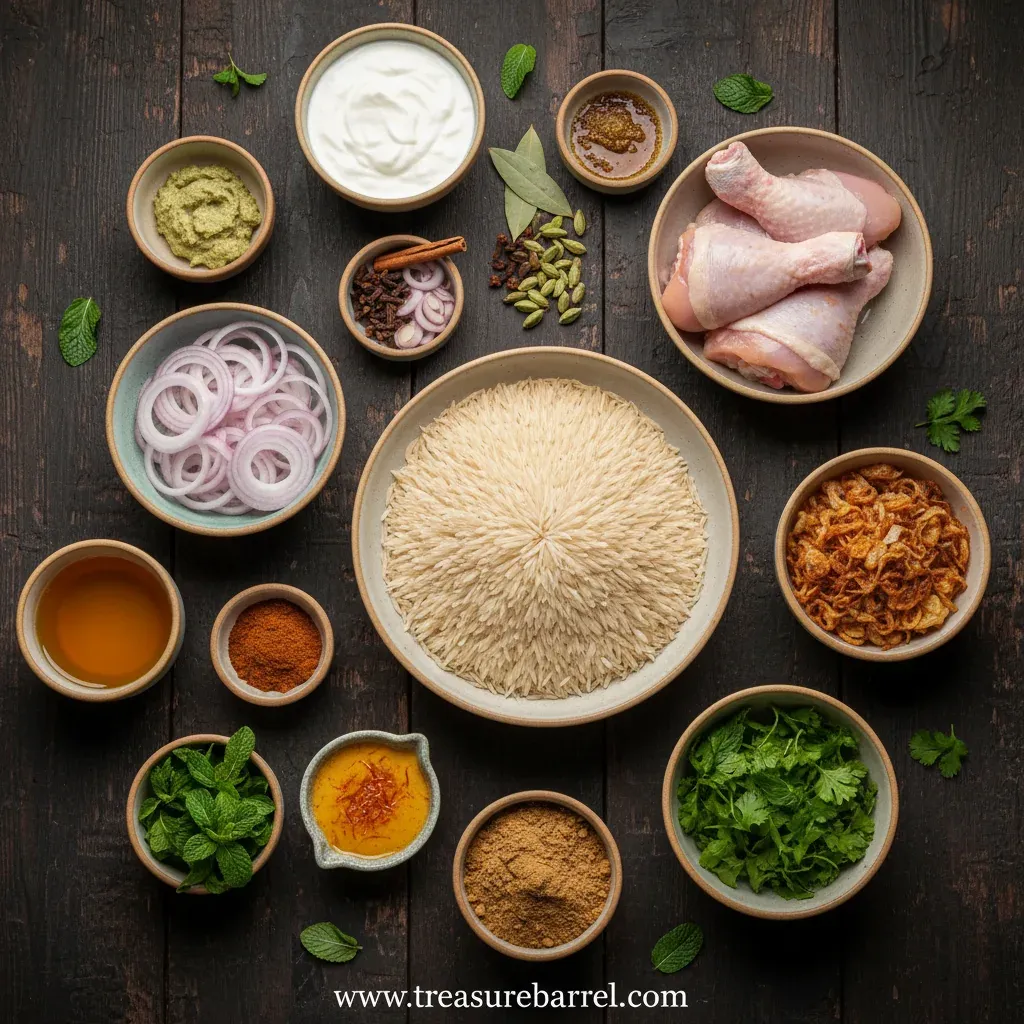
Start by marinating the chicken. In a large bowl, combine the yogurt, ginger-garlic paste, biryani masala, turmeric, red chili powder, lemon juice, salt, and oil. Add the chicken pieces and mix well, making sure every piece is coated. Cover and refrigerate for at least 2 hours, or ideally overnight.
- 2
About 30 minutes before you're ready to cook, soak the basmati rice in plenty of water. This helps the grains cook evenly and stay long. Then, in a large pot, bring 4 cups of water to a boil with the bay leaf, cardamom, cinnamon, cloves, and salt. Drain the rice and add it to the boiling water. Cook for about 5-6 minutes, just until the rice is about 70% cooked. It should still have a firm bite in the center. Drain immediately and set aside.
- 3
In a heavy-bottomed pot (like a Dutch oven), heat a tablespoon of oil. Add the marinated chicken and sear it for about 4-5 minutes per side. You don't need to cook it through, just get some color on the outside. Remove from heat. Now, layer half of the partially cooked rice over the chicken. Sprinkle half of the fried onions, mint, and cilantro over the rice.
- 4
Add the remaining rice as the top layer. Sprinkle the rest of the fried onions, mint, and cilantro. Soak the saffron strands in the warm milk for 5 minutes, then drizzle this golden milk evenly over the top rice layer. Dot the surface with the ghee or butter.
- 5
Now, for the dum. Place a tight-fitting lid on the pot. If you have it, seal the edge with a strip of dough made from flour and water, or use aluminum foil to create a tight seal. This traps the steam inside. Place the pot on the lowest possible heat and let it cook for 25-30 minutes. You might even use a heat diffuser. Do not open the lid during this time.
- 6
After 30 minutes, turn off the heat. Let the biryani rest, still covered, for another 15-20 minutes. This resting time is crucial for the flavors to settle. Finally, gently open the lid—ah, that smell!—and use a fork to fluff the biryani, gently mixing the layers. Serve hot with a side of cool raita. It would also be fantastic alongside a skillet dinner for a feast.
Nutrition per serving
- 480 kcal
- Calories
- 28 g
- Protein
- 52 g
- Carbs
- 18 g
- Fat
Tips & notes
- Marinating time is key for flavorful chicken, so don't skip the long rest. - Be very careful with the salt, as the fried onions also add saltiness. - The biryani can be kept warm in the sealed pot for up to an hour before serving.
Frequently asked questions
Can I use chicken breast instead of thighs?
You can, but honestly, breast meat can dry out more easily with the long cooking time. Thighs are much more forgiving and stay wonderfully juicy. If you use breast, try to reduce the dum time slightly.
My rice always turns out mushy. What am I doing wrong?
This usually happens if the rice is overcooked before layering, or if there's too much liquid in the pot. Make sure to drain the par-boiled rice very well and measure your water carefully for the initial cook.
Can I make this without a heavy pot?
A heavy pot is best because it distributes heat evenly and prevents burning. If you don't have one, you can use any pot but keep the heat on the absolute lowest setting and maybe add a heat diffuser underneath to be safe.
Is it okay to skip the saffron?
The dish will still be delicious, but saffron gives it that signature aroma and color. If you don't have it, a tiny pinch of turmeric mixed with the milk can provide some color, but the flavor will be different.
How do I know when the dum process is done?
You'll smell it. Seriously, the aroma becomes incredibly pronounced. Also, after the resting time, you can carefully open one corner and check if the rice is fully cooked and fluffy. The chicken should be tender and pull apart easily.
What's the best way to reheat leftovers?
The best way is to reheat it gently in a steamer or sprinkle a little water over it and cover it tightly in a pot on the stove over very low heat. The microwave can make the rice a bit tough.