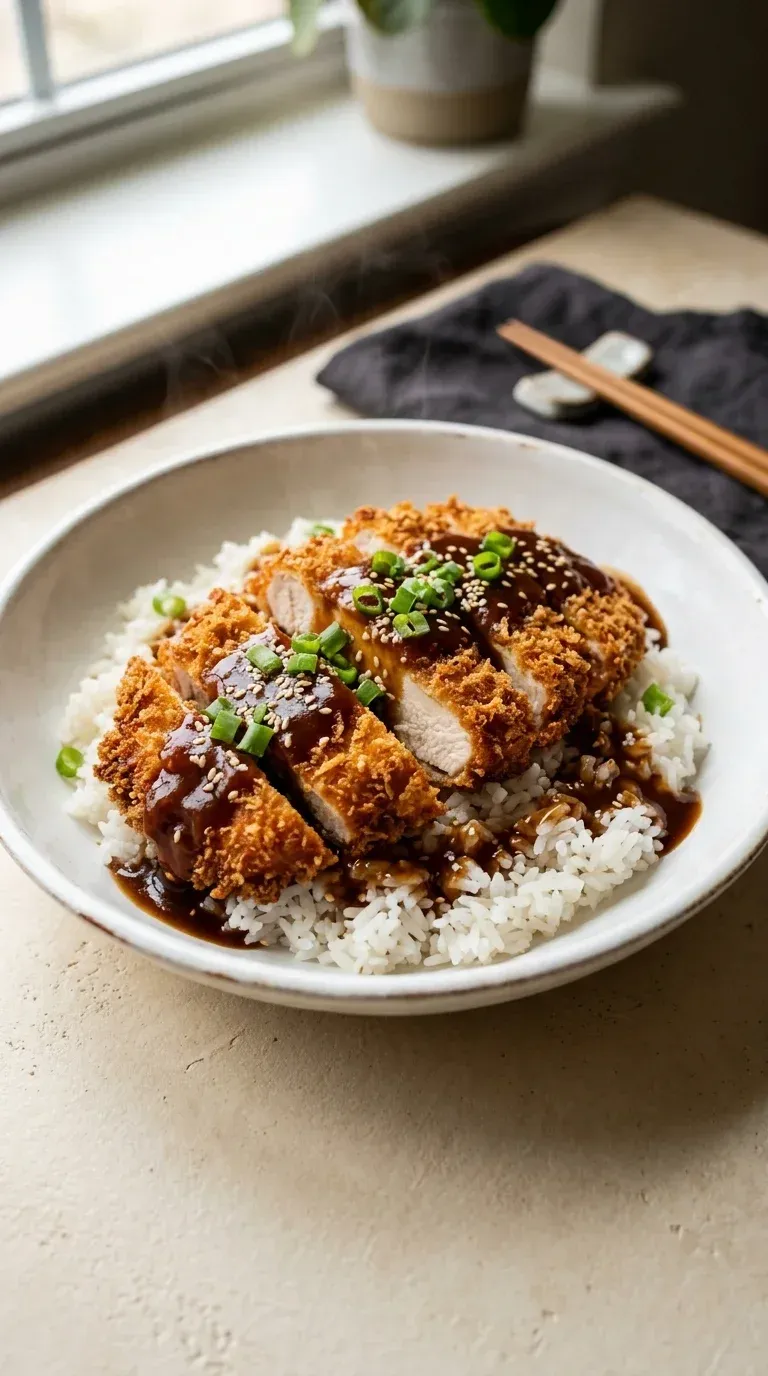
Crispy Chicken Katsu with Tonkatsu Sauce
A simple Japanese-inspired treat. Perfectly fried cutlets served over fluffy rice. Comfort in every crunchy bite.
- Maya Quinn
- Quick Comfort
- September 4, 2026
- 3 min read
- Updated November 5, 2026
- Total time
- 35 min
- Servings
- 4 Servings
- Difficulty:
- Easy
Table of contents
I remember when I first tried making this; I was so nervous about the oil, honestly, but the moment that first piece of chicken hit the pan and started sizzling... wow, I just knew it was going to be special. There is something so grounding about the rhythm of the breading station, you know? Flour, egg, then those lovely panko breadcrumbs.
So, yeah, it is a simple process, but the reward is just lovely. The way the crispy chicken katsu with tonkatsu sauce tastes against a bowl of warm jasmine rice is just pure comfort. It is the kind of meal that makes the house feel quiet and safe, even if the day was a bit of a mess.
I mean, look, you don't need to be a professional to get this right. Just a little patience with the heat and a gentle press on the crumbs. Well, oops, I might have accidentally eaten a few panko flakes while cooking, but that is the best part, isn't it?
The story behind it
The story of the katsu is a beautiful example of culinary evolution, blending Western influence with Japanese precision. It began as a variation of the European schnitzel, which arrived in Japan during the Meiji era. The Japanese chefs adapted the dish, replacing traditional breadcrumbs with panko—larger, airier flakes that create a lighter, more distinct crunch.
Over time, this adaptation became a beloved staple of Japanese home cooking and street food alike. The addition of the thick, savory-sweet sauce transformed the dish into something uniquely its own. This crispy chicken katsu with tonkatsu sauce represents a perfect balance of textures, pairing the fried exterior with a tang that cuts through the richness.
Today, it remains a symbol of comfort across Japan, often served as a hearty lunch or a rewarding dinner. Whether enjoyed in a bustling city cafe or a quiet family kitchen, the dish carries a legacy of adaptation and the timeless appeal of a perfectly fried cutlet.
Why You'll Love It
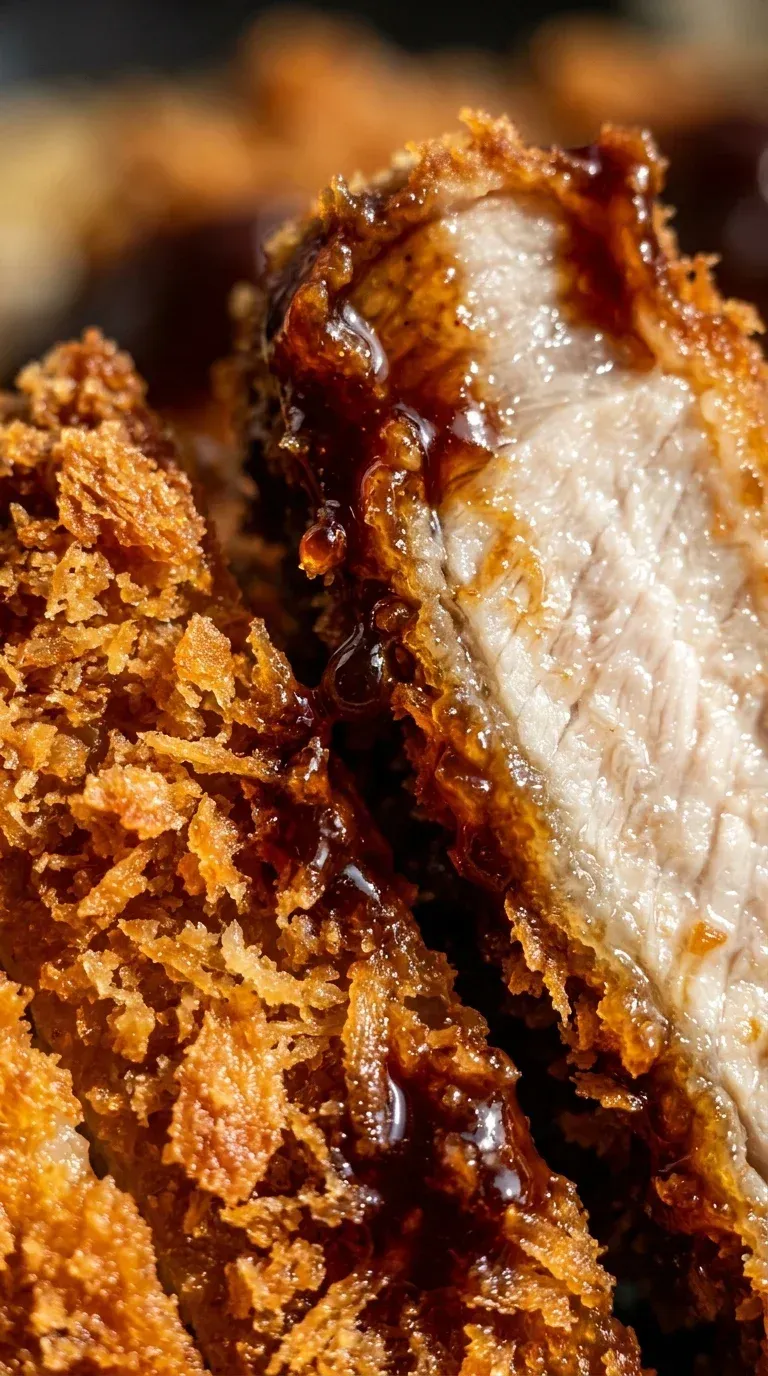
- Honestly, that first bite of the golden panko breadcrumbs is just heaven, so satisfyingly crunchy.
- It's a real hug in a bowl, especially when those 4 boneless skinless chicken breasts are paired with warm jasmine rice.
- I mean, making the tonkatsu sauce from scratch is surprisingly easy, and it adds that deep, tangy richness we all crave.
- Well, it's just the kind of quick comfort meal that makes the whole house smell like a little Japanese bistro.
Tips for success
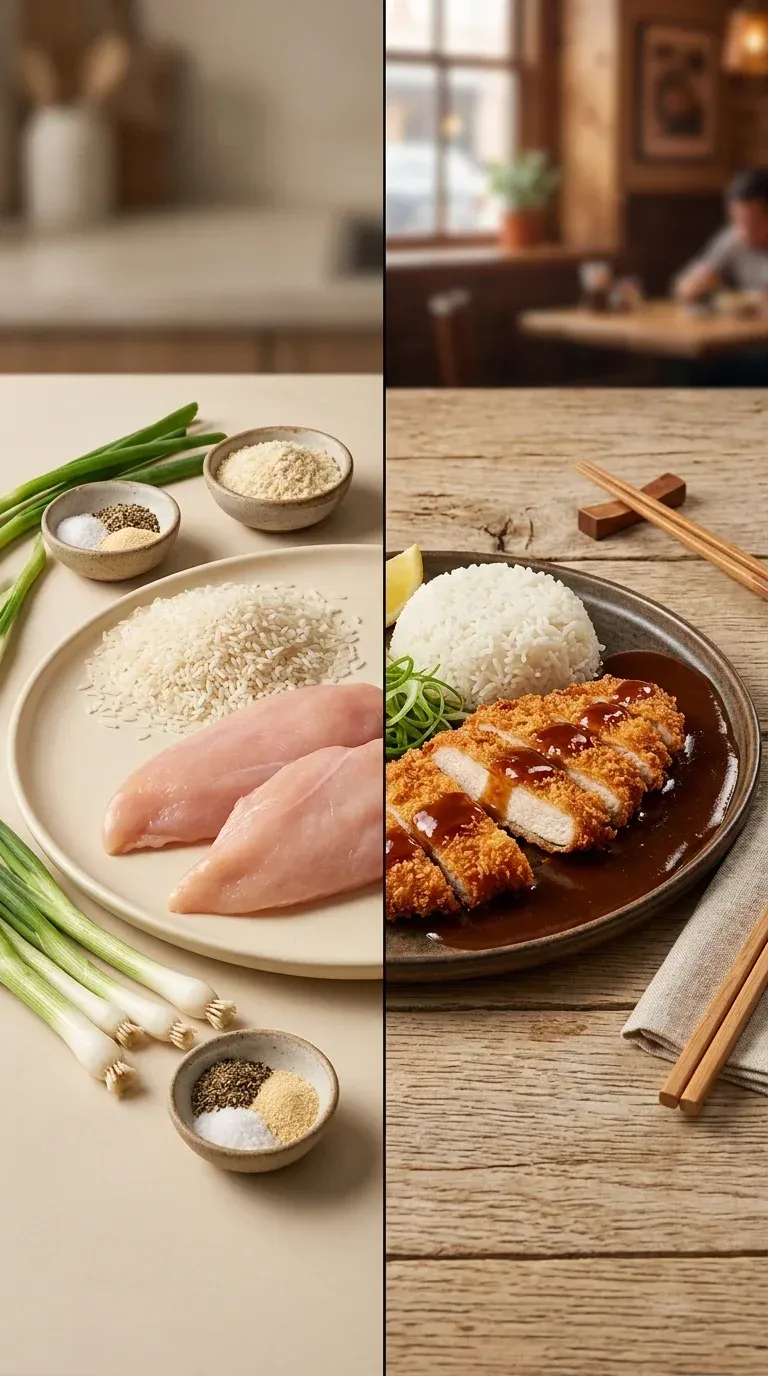
- Oil Temperature, Ensure oil is 350°F/175°C to prevent greasy chicken.
- Pat Dry, Always dry the chicken before breading so the coating stays put.
- Internal Temp, Use a thermometer to hit exactly 165°F (74°C) for juicy meat.
Professional secrets
- The Double-Coat Technique: Re-dipping in egg and panko for an extra-thick crust.
- The Rest Period: Waiting 2 minutes before slicing prevents the meat from drying out.
- Sauce Balancing: Mixing sweet honey with salty soy and tangy ketchup for a complex umami profile.
Common mistakes to avoid
- Overcrowding the pan, which drops the oil temperature and makes the chicken greasy.
- Skipping the paper towel pat-down, causing the panko to slide off the meat.
- Frying on too high a heat, resulting in burnt breadcrumbs and raw chicken.
Substitutions
- Jasmine rice: Short-grain sushi rice. Makes the dish more traditionally Japanese.
- Honey: Maple syrup. Adds a slightly different sweetness.
- Canola oil: Grapeseed oil. Any high-smoke point oil works well.
Variations
- Sesame-Infused Tonkatsu Sauce: For a nuttier aroma, stir 2 tablespoons of toasted sesame oil and 1 tablespoon of toasted sesame seeds into your base sauce.
- Katsu Don Style: Turn this into a hearty donburi bowl by simmering sliced onions and a beaten egg in the tonkatsu sauce, then pouring it over the sliced chicken and rice.
Storage
Keep leftovers in an airtight container in the freezer for up to 3 days. Reheat in a skillet or oven at 350°F until piping hot.
Make ahead
You can prepare the tonkatsu sauce a day in advance and keep it in the fridge. The chicken, however, is best breaded and fried right before serving to keep that crunch.
Leftovers
Store any extra katsu in an airtight container in the freezer for up to 3 days. To bring back the crunch, reheat in a skillet or oven at 350°F until piping hot.
Serving ideas
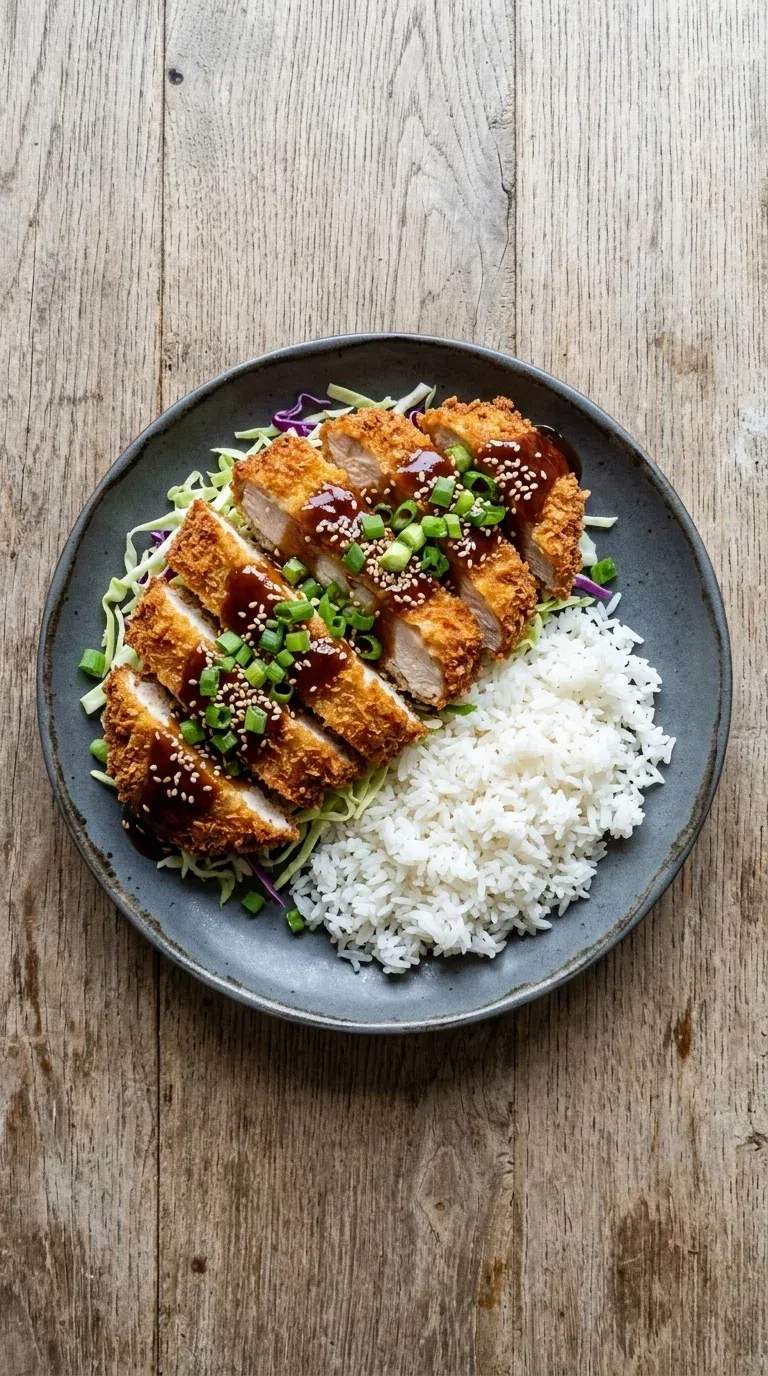
- Serve with a side of shredded cabbage salad dressed in rice vinegar and sesame seeds.
- Add steamed broccoli or sautéed green beans for a healthy balance.
- Finish with an extra drizzle of tonkatsu sauce and a pat of butter on the rice.
- Garnish with a sprinkle of toasted sesame seeds and sliced green onions for color.
Allergy information
Contains wheat (flour, panko), eggs, and soy.
Crispy Chicken Katsu with Tonkatsu Sauce
A simple Japanese-inspired treat. Perfectly fried cutlets served over fluffy rice. Comfort in every crunchy bite.
- Prep time
- 25 min
- Cook time
- 10 min
- Total time
- 35 min
- Difficulty
- Easy
- Cuisine
- Japanese
Ingredients
Chicken and Breading
Tonkatsu Sauce
Serving and Garnish
Initial Marinade
Instructions
- 1
Let's start with the sauce. In a small bowl, whisk together your ketchup, Worcestershire sauce, soy sauce, honey, mirin, and sugar. I like to set this aside early so the flavors have a moment to get to know each other.
- 2
Now, take those sliced chicken cutlets and pat them dry with paper towels. Honestly, this is the secret to a good crust. Just season both sides lightly with salt.
- 3
Time to set up your breading station. Use three shallow dishes: flour in the first, those beaten eggs in the second, and your panko breadcrumbs in the third. It just makes everything so much smoother.
- 4
Take each chicken piece and dredge it in flour, shaking off the excess—you don't want a thick paste here. Dip it into the eggs, and then coat it thoroughly with panko. Give it a gentle press to make sure the crumbs really stick.
- 5
Heat about 1/2 inch of oil in your skillet over medium–high heat. You're looking for that shimmer, which usually happens around 350°F/175°C.
- 6
Carefully lay the coated chicken into the hot oil. Fry them for about 3–4 minutes per side. You want a beautiful golden brown color and an internal temperature of 165°F (74°C).
- 7
Move the katsu onto paper towels to drain. Well, let them rest for about 2 minutes—it keeps the juices inside—then slice them into strips.
- 8
Scoop your warm jasmine rice into bowls and lay the sliced katsu right on top. Drizzle over a generous amount of that tonkatsu sauce we made earlier.
- 9
Finish it off with those optional toppings—green onions, sesame seeds, or some shredded cabbage for a little bit of fresh crunch.
- 10
And that's it! Enjoy it immediately while it's still hot and that crust is perfectly crispy.
Nutrition per serving
- 580 kcal
- Calories
- 38 g
- Protein
- 42 g
- Carbs
- 28 g
- Fat
Tips & notes
- Pressing the panko gently helps the breadcrumbs adhere and keeps the crust from falling off. - Double-coating the chicken (flour, egg, panko, egg, panko) creates an even crunchier surface. - Keep an eye on your oil; too hot and the outside burns before the middle is done, too cool and it gets greasy.
Frequently asked questions
What if my panko breadcrumbs are falling off the chicken?
Oops, that happens! Just make sure you're patting the chicken dry before the flour and pressing the panko in firmly with your hands.
Can I reheat leftovers without losing the crunch?
Yeah, you can! I recommend using a skillet or an oven at 350°F to get that crispiness back instead of using a microwave.
My oil is bubbling too much, is that okay?
It might be a bit too hot, look. If it's browning too fast, turn the heat down a notch so the chicken cooks through without burning the crust.