French Mustard Chicken – Classic Poulet à la Moutarde
A timeless bistro classic brought right into your home kitchen. Creamy, tangy, and deeply satisfying. The ultimate cozy dinner for a rainy evening.
- Evelyn Mae
- Best Chicken Recipe
- August 19, 2026
- 4 min read
- Updated November 5, 2026
- Total time
- 50 min
- Servings
- 4 Servings
- Difficulty:
- Medium
Table of contents
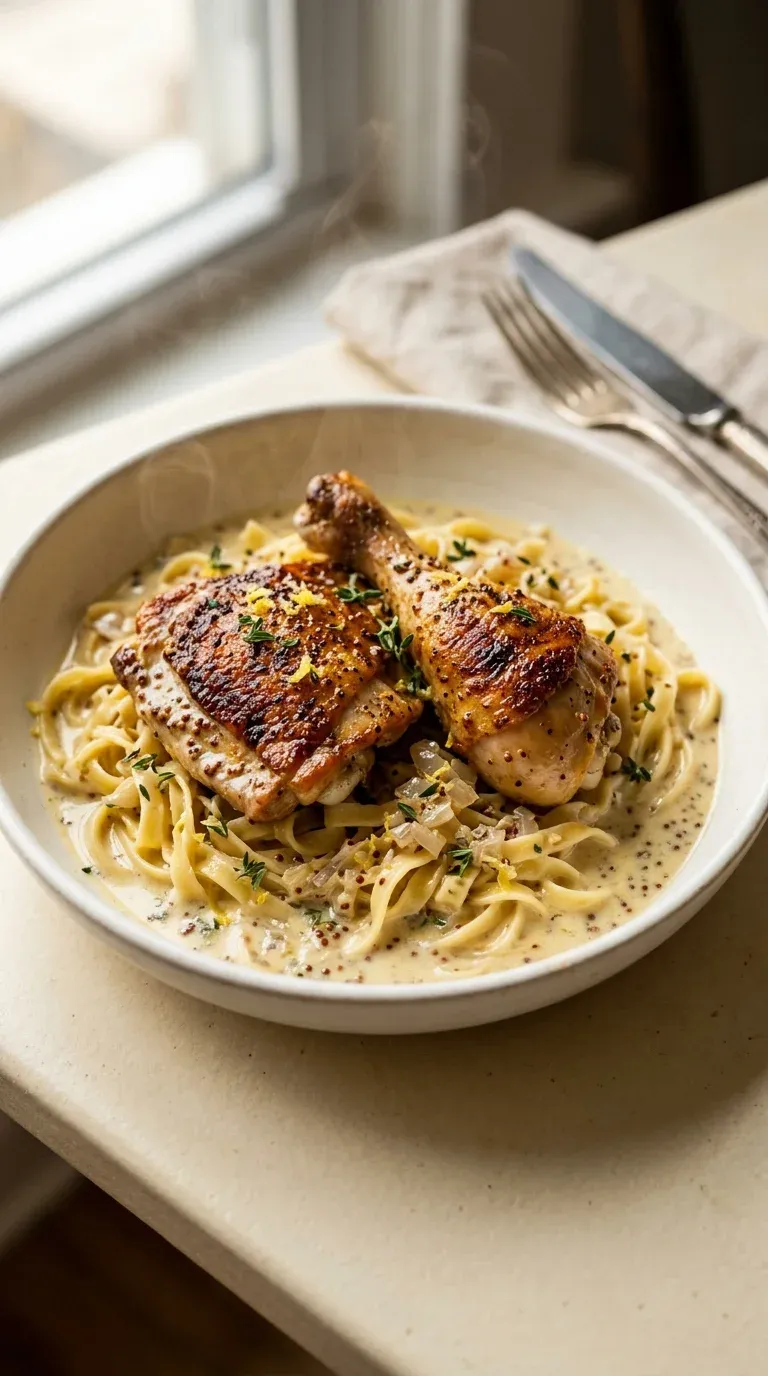
Well, look, there is just something about the way a skillet of chicken smells when it's searing in olive oil and unsalted butter. I remember when I first tried making a proper Poulet à la Moutarde; I was so nervous about the sauce breaking, but honestly, it turned out just fine. It's a gentle process, really, just waiting for those shallots to get soft and translucent while the house starts to smell like a little cafe in Provence.
I mean, the magic is really in that combination of Dijon mustard and heavy cream. It creates this lush, golden blanket over the chicken that is just... wow. I usually serve it with some buttered noodles to soak up every last drop, because ugh, leaving any of that sauce behind would just be a shame.
So, if you're looking for something that feels a bit special but doesn't require you to spend all day over the stove, this is the one. It's grounded, it's simple, and it always makes my family feel taken care of.
The story behind it
The art of the creamy mustard sauce is a cornerstone of French home cooking, blending the rustic nature of the countryside with the refined techniques of the city. Poulet à la Moutarde relies on the sharp, pungent profile of Dijon mustard—originating from the town of Dijon in Burgundy—to cut through the richness of the cream, creating a balanced harmony of flavors.
Historically, this dish represents the French philosophy of "cuisine bourgeoise," where high-quality, simple ingredients like dry white wine and fresh thyme are elevated through careful searing and deglazing. It is a method that prioritizes the depth of flavor found in the "fond," those browned bits of chicken left in the pan, which provide the soul of the sauce.
Across France, this french mustard chicken is cherished as a comforting staple. Whether prepared in a heavy cast-iron skillet or a traditional copper pot, the dish remains a testament to how a few humble ingredients can be transformed into a meal of timeless elegance.
Why You'll Love It
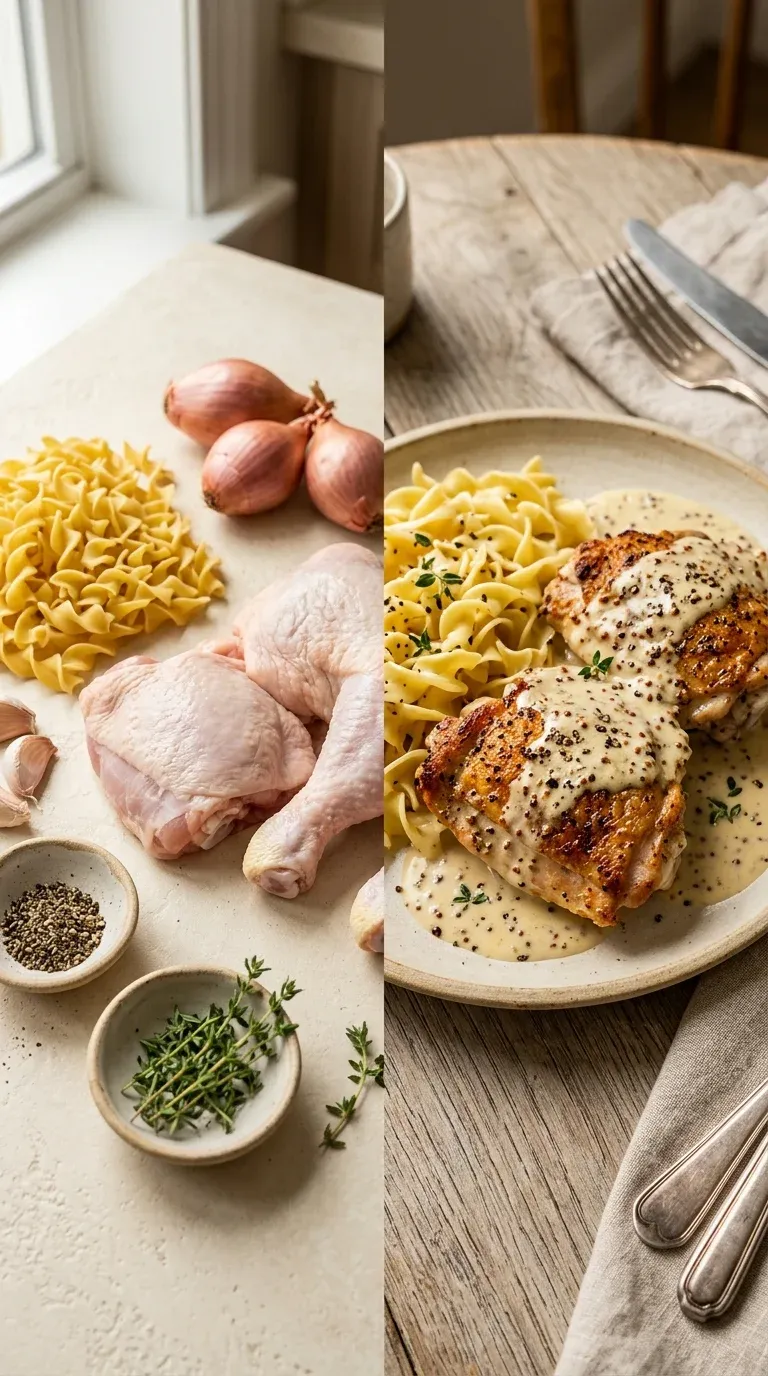
- Honestly, there is something so comforting about the way 3 tbsp Dijon mustard cuts through the cream, making it feel like a little trip to France without leaving your kitchen.
- I love how the 1 lb bone‑in, skin‑on chicken thighs get that beautiful golden crust; it just makes the whole house smell like a proper Sunday dinner.
- Well, look, it's just a one-pan kind of deal for the most part, which means less scrubbing and more time to actually enjoy the meal with your family.
- It's just so cozy, yeah? The way the sauce clings to the chicken is just... wow, it's a real hug on a plate.
Tips for success
- Internal Temperature, Use a meat thermometer to ensure the chicken reaches a safe 165°F without overcooking it.
- Sauce Consistency, If you like a thicker sauce, whisk in a teaspoon of flour or cornstarch dissolved in a tablespoon of cold water during step 5.
- Balance of Flavor, Reserve a splash of the cooked wine before adding cream to add brightness and balance the richness of the mustard.
Professional secrets
- Searing skin-side down first ensures a deep golden color and renders the fat for a better texture.
- Deglazing the pan recovers the fond, which is essential for a professional-tasting French sauce.
- Resting the meat for 5 minutes allows juices to redistribute, ensuring every bite is tender.
Common mistakes to avoid
- Not drying the chicken skin, which leads to steaming instead of searing.
- Overcooking the garlic, which can make the sauce taste bitter.
- Adding the cream before the wine has reduced, making the sauce too thin.
Substitutions
- Dry white wine: Chicken broth with a squeeze of lemon. A great option for those avoiding alcohol while keeping the acidity.
- Heavy cream: Full-fat coconut milk. Makes it dairy-free, though the flavor will shift slightly toward a coconut note.
- Fresh thyme: Dried thyme or rosemary. Use half the amount if using dried herbs.
Variations
- Lemon‑Herb French Mustard Chicken: Add lemon zest and a splash of fresh lemon juice right at the end of cooking to brighten the sauce and cut through that wonderful richness.
- Beef Sausage-Crusted French Mustard Chicken: Since we avoid pork, you can use crushed beef sausage pieces and use the rendered fat for searing to add a smoky crunch and deeper flavor.
Storage
Keep in an airtight container in the refrigerator for up to 3 days. For longer, it can be frozen for up to 3 months.
Make ahead
You can cook the chicken and sauce fully, then store it in the fridge. It actually tastes a bit more developed the next day, honestly.
Leftovers
Store in an airtight container for 3 days. To reheat, do it gently on the stove over low heat—adding a splash of water or broth if the sauce has thickened too much.
Serving ideas
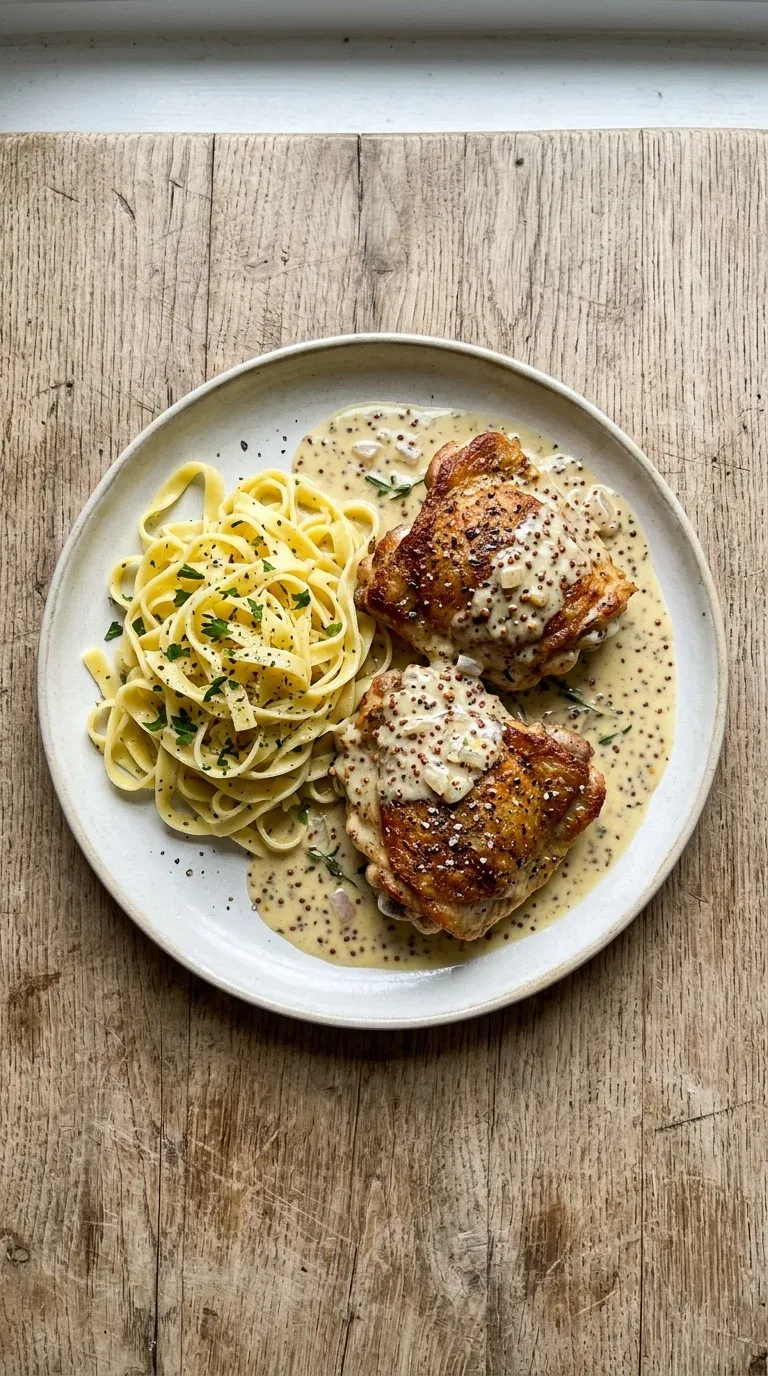
- Serve over buttered egg noodles for a comforting feel
- Place atop buttered potatoes for a hearty meal
- Top with freshly chopped parsley and a zest of lemon for a bright finish
- Pair with steamed green beans or roasted Brussels sprouts for balance
Allergy information
Contains dairy (heavy cream, butter) and mustard.
French Mustard Chicken – Classic Poulet à la Moutarde
A timeless bistro classic brought right into your home kitchen. Creamy, tangy, and deeply satisfying. The ultimate cozy dinner for a rainy evening.
- Prep time
- 15 min
- Cook time
- 35 min
- Total time
- 50 min
- Difficulty
- Medium
- Cuisine
- French
Ingredients
The Chicken
The Sauce
Instructions
- 1
Start by patting your chicken thighs dry with a paper towel—it's the secret to a good sear, honestly. Season both sides generously with salt and freshly ground black pepper.
- 2
Heat that olive oil in your skillet over medium‑high heat. Place the chicken skin‑side down and let it sizzle for 3–4 minutes until it's a lovely golden brown, then flip and sear the other side for about 2 minutes. Once they look right, move them to a plate and set them aside for a bit.
- 3
Turn the heat down to medium and melt the butter in that same skillet. Sauté your chopped shallot until it's translucent, which takes about 2 minutes, then stir in the minced garlic for another 30 seconds. It smells wonderful at this point, yeah.
- 4
Now, deglaze the pan with the dry white wine. Use your spoon to scrape up all those browned bits from the bottom—that's where the flavor lives. Let the liquid bubble away until it's reduced by about 80%, usually 3–4 minutes.
- 5
Whisk in the heavy cream, Dijon mustard, whole grain mustard, and thyme. Keep it at a gentle simmer and let the sauce thicken up just a bit for about 2–3 minutes.
- 6
Slide those seared chicken thighs back into the skillet, spooning that creamy sauce right over them. Cover the pan and let them simmer away until the internal temperature reaches 165°F, which should take about 15–18 minutes.
- 7
Now, look, if you're like me and love a crispier skin, you can pop the whole skillet into a preheated 375°F oven for 8–10 minutes for a better finish.
- 8
Remove the skillet from the heat and move the chicken and sauce to a platter. Let it rest for 5 minutes—it's hard to wait, I know, but it's worth it.
- 9
Give the sauce a little taste. Feel free to add a pinch more salt, pepper, or a bit more mustard if you're feeling bold.
- 10
Serve it hot, maybe garnished with some fresh herbs or extra thyme. It's just lovely alongside buttered noodles, roasted asparagus, or a crisp green salad.
Nutrition per serving
- 480 kcal
- Calories
- 32 g
- Protein
- 9 g
- Carbs
- 34 g
- Fat
Tips & notes
- Using bone-in thighs keeps the meat much juicier than breasts would. - The whole grain mustard is optional, but it adds such a nice rustic texture to the sauce. - Don't rush the reduction of the wine, as it concentrates the flavor.
Frequently asked questions
What if I don't have a meat thermometer?
Ugh, I've been there! Just make sure the juices run clear and the chicken feels firm to the touch, but a thermometer is really the only way to be sure.
Can I use chicken breasts instead of thighs?
You can, but breasts cook much faster and can dry out, so keep a very close eye on them. I personally prefer the thighs for that juicy, tender feel.
How do I store the leftovers?
Just pop them in an airtight container in the fridge for up to 3 days. When you reheat it on the stove, add a tiny splash of water or cream to loosen the sauce back up.