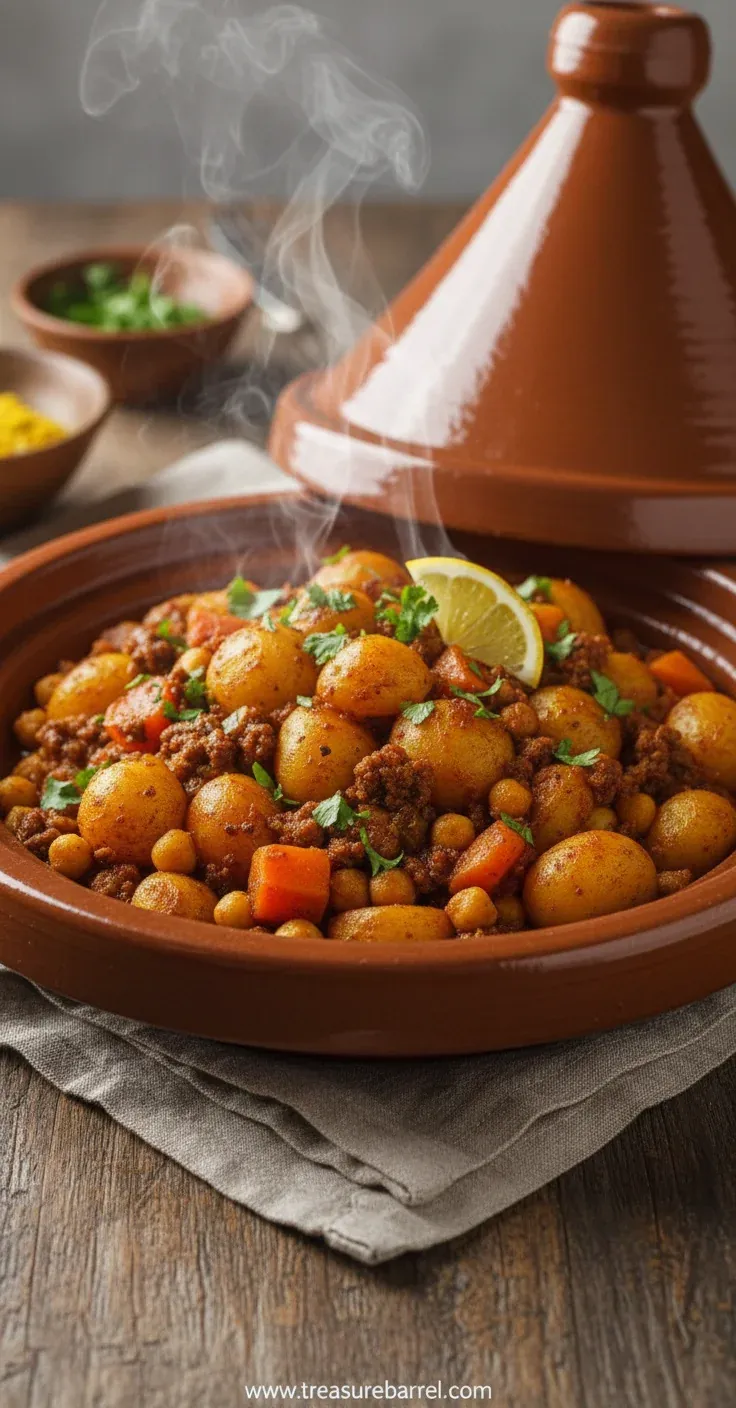
Moroccan Potato Tagine
A warmly spiced vegetarian tagine with potatoes, carrots, and chickpeas simmered to perfection.
- Amelia Rose
- Warm Meals
- January 24, 2026
- 4 min read
- Updated November 5, 2026
- Total time
- 1 h 35 min
- Servings
- 6 Servings
- Difficulty:
- Easy
Table of contents
Honestly, there are days when the world feels a little too fast, a little too loud. On those afternoons, I find myself drawn to the kitchen, to the steady rhythm of chopping vegetables and the quiet hum of the stove. This tagine, well, it’s one of those recipes that slows everything down. It doesn't ask for perfection, just patience. I remember rainy Sundays when the smell of it cooking would drift through the whole house, and by dinnertime, everyone would be gathered, waiting.
The essence of the dish
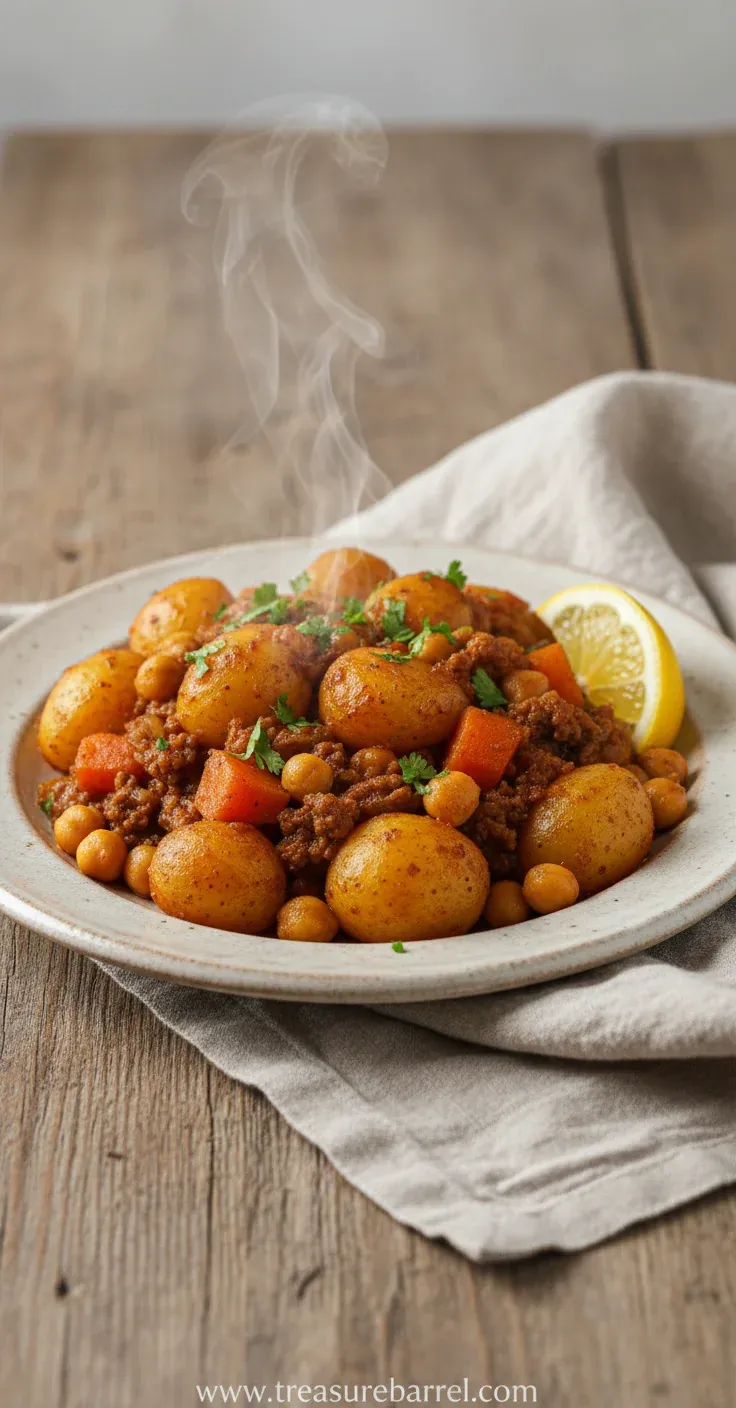
This tagine is about comfort and warmth. It's the kind of food that simmers for hours, filling your home with an aroma that promises something good is coming. It’s not flashy, but deeply satisfying, where humble potatoes become the star through slow cooking and a blend of warm, earthy spices.
A fun fact or historical angle
The word 'tagine' refers to both the cooking vessel and the food cooked inside it. These distinctive clay pots have been used in North Africa for over a thousand years, their unique design creating a miniature steamy ecosystem that perfectly tenderizes meat and vegetables.
Flavor or sensory focus
What you'll notice first is the incredible fragrance of toasted cumin and coriander. Then, when you taste it, the soft, yielding texture of the potatoes against the slight bite of the chickpeas, all brought together by a rich, spiced broth that’s both earthy and bright from the lemon.
The story behind it
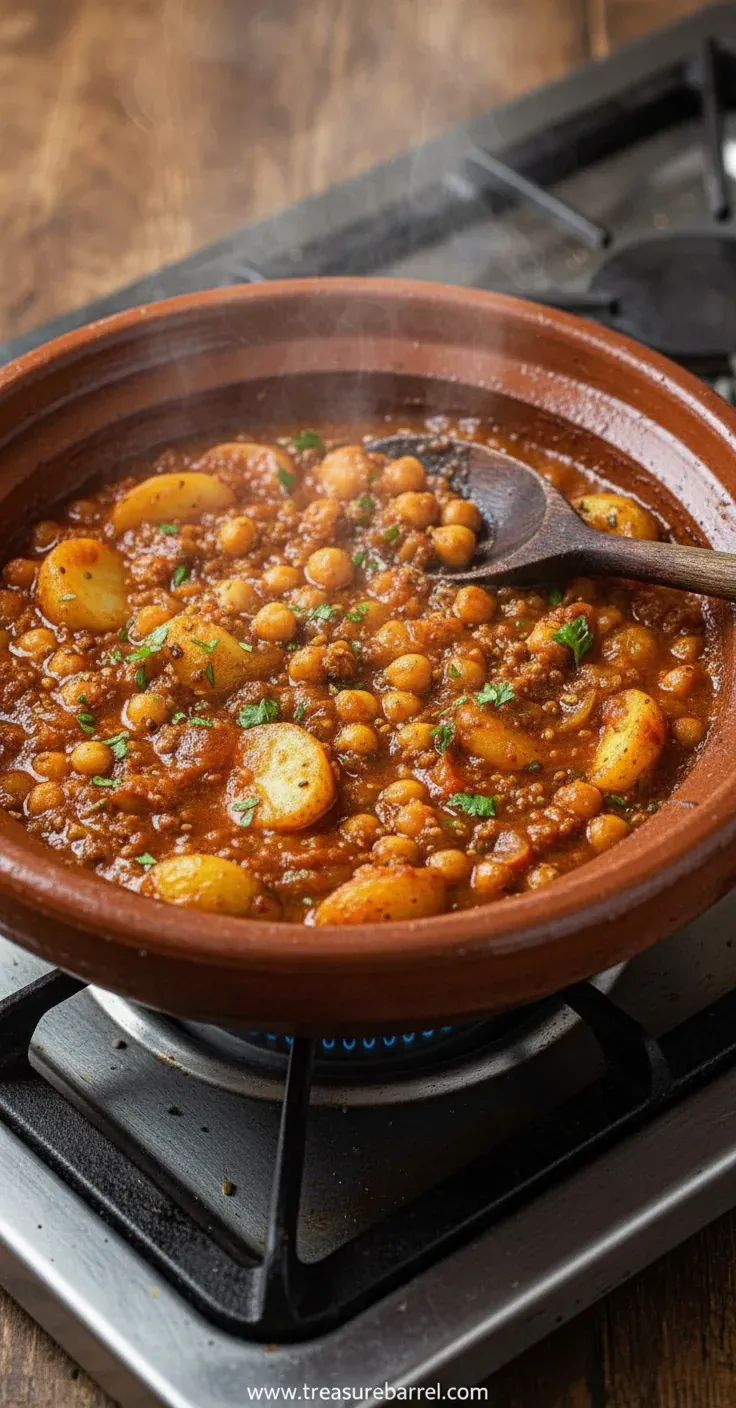
The tagine, both the iconic vessel and the slow-cooked stew it's named for, has been a cornerstone of North African cuisine for centuries. Originating from the Berber people of Morocco, these earthenware pots with their distinctive conical lids are ingeniously designed to trap steam, which then condenses and drips back down, basting the ingredients in their own flavorful juices. This method of cooking transforms humble vegetables and legumes into extraordinarily tender and aromatic dishes. The Moroccan potato tagine is a celebration of this tradition, a testament to how simple ingredients, when given time and the right blend of spices, can create a meal that feels both ancient and deeply comforting.
Why You'll Love It
- Incredibly aromatic and fills your home with a welcoming warmth.
- A complete, satisfying vegetarian meal that even meat-lovers adore.
- Perfect for make-ahead meals, as the flavors get even better overnight.
- Uses simple, pantry-friendly ingredients for a fuss-free cooking experience.
Tips for success
- Don't skip toasting the spices, It unlocks their full aromatic potential
- Cut vegetables uniformly, Ensures everything cooks at the same rate
- Taste before serving, The preserved lemon adds salt, so adjust seasoning at the end
Professional secrets
- Use a well-seasoned pot, Prevents sticking and adds depth of flavor
- Low, steady heat is key, Achieves tender vegetables without breaking them down
- Let it rest before serving, Allows the flavors to meld together perfectly
Common mistakes to avoid
- Cooking at too high a boil, Causes vegetables to break down into mush.
- Not toasting the spices, Results in a flat, less aromatic flavor.
- Adding the preserved lemon too early, Can make the flavor unpleasantly bitter.
- Overcrowding the pot, Use a pot large enough to hold everything in a single layer.
Substitutions
- Preserved Lemon: Zest and juice of 1 fresh lemon. Add right at the end of cooking. The flavor will be brighter and less complex, but still delicious.
- Yukon Gold Potatoes: Russet or red potatoes. Russets will become fluffier, red potatoes will hold their shape more firmly. Adjust cooking time slightly if needed.
- Vegetable Broth: Chicken broth or water. Chicken broth will add more savory depth. Water will work in a pinch, but you may need to adjust seasoning more carefully.
Variations
- With Lamb or Beef Sausage: For a meatier version, brown 1 lb of diced lamb shoulder or beef sausage at the beginning. Remove, then proceed with the recipe, adding the meat back to simmer with the vegetables.
- With Sweet Potatoes and Apricots: Replace half the potatoes with sweet potatoes and add a handful of dried apricots for a sweeter, more complex flavor profile that's still authentic.
Storage
Store cooled leftovers in an airtight container in the refrigerator for up to 4 days. Reheat gently on the stovetop over low heat, adding a splash of water or broth if needed.
Make ahead
You can chop the vegetables a day in advance and store them covered in the fridge. The entire tagine can be made up to 3 days ahead and reheated gently. The flavors improve over time.
Leftovers
Leftovers reheat beautifully on the stovetop over low heat. Add a tablespoon or two of water or broth to loosen the sauce if necessary. They can also be used as a filling for wraps or pitas.
Serving ideas
- Spoon over a bed of fluffy couscous.
- Serve directly from the tagine pot at the table for a communal feel.
- Accompany with a tangy yogurt sauce on the side.
- Garnish with toasted almond slivers for a bit of crunch.
Allergy information
This recipe is naturally gluten-free and vegan. Check your vegetable broth to ensure it meets your dietary needs.
Moroccan Potato Tagine
A warmly spiced vegetarian tagine with potatoes, carrots, and chickpeas simmered to perfection.
- Prep time
- 20 min
- Cook time
- 1 h 15 min
- Total time
- 1 h 35 min
- Difficulty
- Easy
- Cuisine
- Middle Eastern
- Course
- Main Course
Ingredients
Main Ingredients
For the Spice Base and Broth
Instructions
- 1
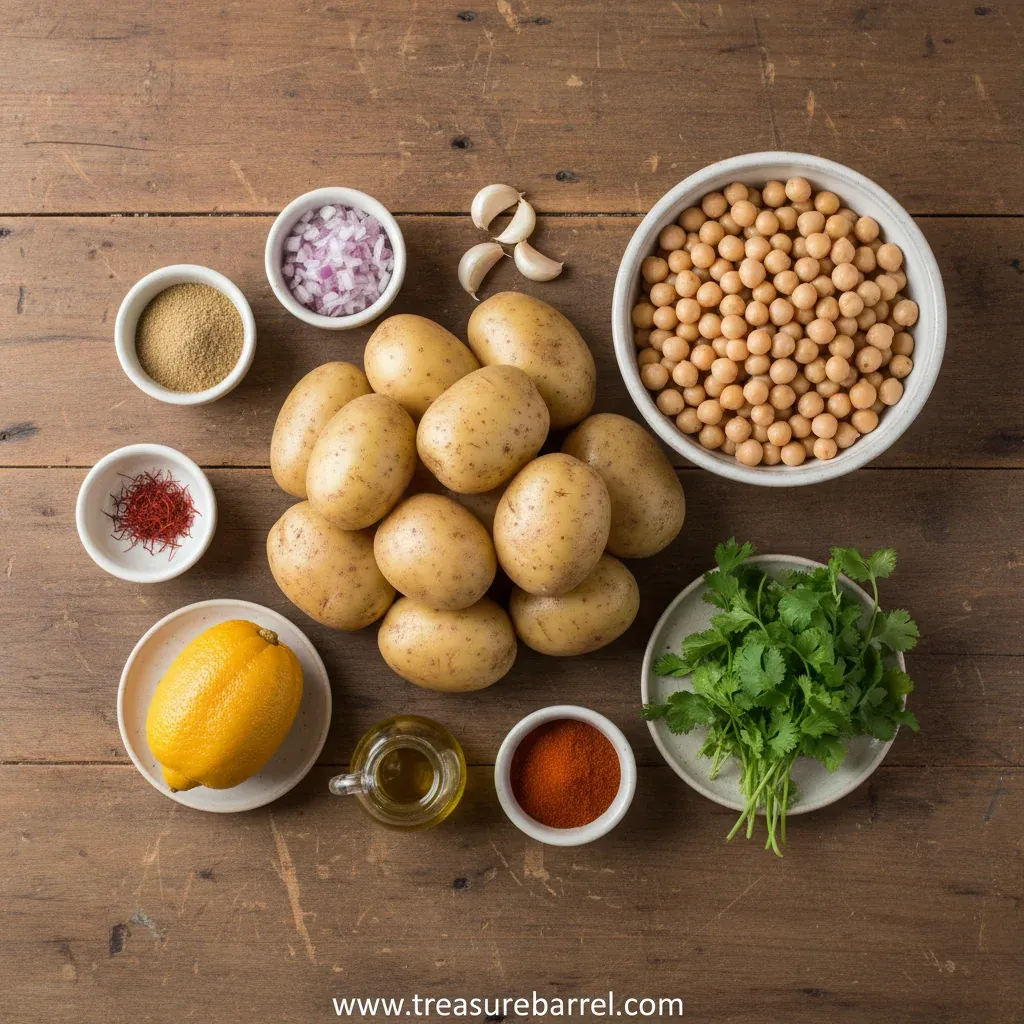
Prep the vegetables. Peel and chop the potatoes and carrots into similarly sized chunks so they cook evenly. Dice the onion and mince the garlic. Rinse the chickpeas. Having everything ready makes the next steps feel calm and organized.
- 2
Heat the olive oil in a large tagine or heavy-bottomed pot over medium heat. Add the diced onion and cook until softened and translucent, about 5-7 minutes. Stir in the minced garlic and cook for another minute until fragrant.
- 3
Toast the spices. Add the cumin, coriander, paprika, turmeric, and optional cayenne to the pot. Stir constantly for about 60 seconds until they become incredibly aromatic. Be careful not to burn them. This is where the deep flavor foundation is built.
- 4
Add the potatoes and carrots to the pot. Toss them well in the spiced oil until they are nicely coated. This helps the flavor cling to every piece. Pour in the vegetable broth and bring everything to a gentle simmer.
- 5
Simmer gently. Reduce the heat to low, cover the tagine or pot with its lid, and let it cook for about 45 minutes to 1 hour. You want the potatoes and carrots to be fork-tender but not mushy. Check occasionally to ensure it's at a gentle bubble, not a boil.
- 6
Add the chickpeas. About 15 minutes before the end of the cooking time, stir in the rinsed chickpeas so they can heat through and absorb some of the flavors without becoming too soft.
- 7
Finish and serve. Once the vegetables are tender, stir in the chopped preserved lemon and most of the fresh herbs. Taste and adjust seasoning with salt and pepper. Let it sit off the heat for 5 minutes before serving garnished with the remaining herbs.
Nutrition per serving
- 285 kcal
- Calories
- 7 g
- Protein
- 45 g
- Carbs
- 10 g
- Fat
Tips & notes
- This tagine is fantastic for meal prep—it reheats beautifully. - If the broth seems too thin after cooking, you can mash a few potato pieces against the side of the pot to thicken it naturally. - For a heartier meal, brown some diced lamb or beef sausage in the pot before starting the onions.
Frequently asked questions
Can I make this without a tagine pot?
Absolutely. A heavy-bottomed Dutch oven or a large pot with a tight-fitting lid will work perfectly. The key is to trap the steam, which any good pot can do.
What can I use instead of preserved lemon?
The best substitute is the zest and juice of a fresh lemon added right at the end of cooking. It won't have the same fermented depth, but it will provide the necessary bright, acidic kick.
Can I add meat to this tagine?
You certainly can. Diced lamb shoulder or beef sausage would be wonderful additions. Brown the meat first, then remove it and proceed with the recipe, adding it back in to simmer with the vegetables.
How long will leftovers keep?
Stored in an airtight container in the fridge, this tagine will keep for 3-4 days. The flavors will continue to meld and deepen, making it arguably even better.
Is this tagine freezer-friendly?
Yes, it freezes very well. Cool it completely, then transfer to freezer-safe containers. It will keep for up to 3 months. Thaw in the fridge overnight before reheating gently on the stove.
What should I serve with it?
Couscous is the classic accompaniment, soaking up the delicious sauce. Crusty bread for dipping is also fantastic. A simple green salad on the side provides a nice, crisp contrast.