
I remember the first time I had proper ratatouille – not the fancy arranged version, but the rustic country style simmered for hours in a heavy pot. It was in a little village near Nice, at a market stall where an elderly woman with hands like wrinkled parchment stirred a giant copper pot. The scent of thyme and bay leaves wrapped around me like a warm shawl, and when she handed me a bowl, the vegetables were so tender they practically melted together.
That memory stayed with me through years of cooking for my family, especially during the transitional seasons when the garden gives its last glorious bounty before winter settles in. There's a particular comfort in using vegetables that have soaked up the last of the autumn sun, each one carrying the promise of warmth against the coming cold.
One particularly blustery day, when the wind was howling and my kids were coming in with rosy cheeks from playing outside, I decided to transform that Provençal memory into soup form. I wanted something they could cradle in their hands, steam rising to warm their faces, with all the familiar vegetables they loved but in a new, comforting format. The result was this soul-warming creation that's become our cold-weather staple.
The beauty of this soup is how it changes with the seasons – in late summer I use fresh tomatoes from the garden, but in winter, canned San Marzanos work beautifully. It's forgiving, adaptable, and always feels like coming home. When I serve it now, with crusty bread for dipping, I can still smell that French market and feel the sun on my face, even while watching snow fall outside my kitchen window.
Why You'll Love It
-
Cozy comfort in every spoonful - There's something deeply nourishing about vegetables that have simmered until they're practically whispering to each other in the pot. The way the eggplant absorbs the broth while keeping its shape, the tomatoes breaking down into a rich base, the zucchini maintaining just enough bite – it's like all the best parts of summer preserved for a chilly day. I love how the herbs infuse the entire kitchen with that unmistakable Provençal scent that makes everyone wander in asking what's for dinner.
-
Perfect for using seasonal abundance - When your garden or farmers market is overflowing with late summer vegetables, this soup is the most wonderful way to honor that bounty. I've made it with purple bell peppers instead of green, added pattypan squash when zucchini wasn't available, even thrown in some yellow tomatoes for color. The recipe is wonderfully flexible, adapting to whatever looks best that day while still delivering that classic ratatouille character that feels both rustic and elegant.
-
Meal prep magic - This soup gets better as it sits, making it perfect for busy weeks. I often make a big pot on Sunday and watch how the flavors deepen and marry over the next few days. The vegetables soften even more, the herb notes become more pronounced, and honestly, by day three it's almost a different – and equally delicious – experience. It reheats beautifully and always makes me feel like I've got a secret weapon waiting in the fridge.
-
Nostalgia in a bowl - Every time I make this, it transports me back to that French market with the cobblestone streets and the smell of herbs drying in the sun. There's a timeless quality to these combinations that feels both ancient and immediately comforting. It's the kind of food that connects generations – my grandmother would have approved, and my kids now request it by name when the leaves start turning.
My family requests this weekly during fall! The vegetables melt into the most comforting broth that tastes like a hug in a bowl.
Essential Ingredient Guide
- Eggplant: Choose eggplants that feel heavy for their size with smooth, shiny skin – no soft spots or wrinkles. I like to salt mine and let them sit for about 20 minutes before cooking, which helps draw out any bitterness and prevents them from absorbing too much oil. Honestly, this extra step makes such a difference in the final texture, giving the eggplant a meaty quality that holds up beautifully in the soup.
- San Marzano tomatoes: These tomatoes have a sweetness and low acidity that makes them perfect for soups and stews. If you can't find San Marzanos, look for any good-quality canned tomatoes – the kind that come whole in their juices rather than pureed. I crush them with my hands right into the pot, which feels wonderfully primitive and connects me to generations of cooks who've done the same.
- Fresh herbs: The combination of thyme, rosemary, and bay leaf is what gives this soup its soul. Fresh is definitely best here – I keep a little herb garden right outside my kitchen door just for moments like this. The way the thyme releases its fragrance when you rub it between your fingers is one of those small kitchen joys that never gets old.
 Family Favorites
Meat Lovers Pizza Casserole Recipe
A comforting baked dish that brings pizza night flavors together in one easy casserole.
Complete Cooking Process
-
Vegetable Prep:
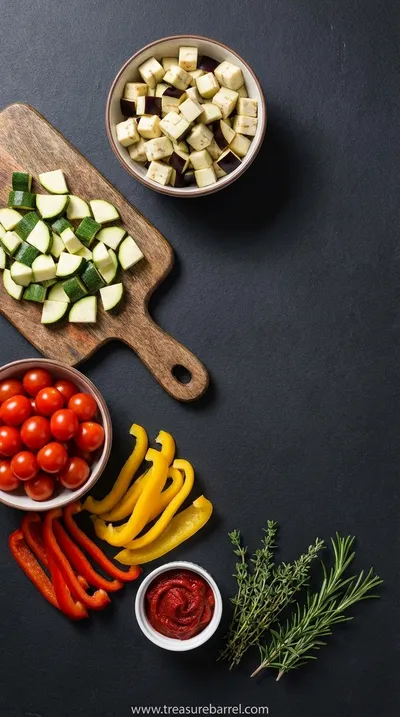
There's a rhythm to prepping vegetables that I find so therapeutic. First, I wash everything and line it up on my cutting board like a colorful still life. The eggplant gets cubed into generous chunks – not too small, because you want them to hold their shape. The zucchini I cut into half-moons, and the bell pepper into cheerful squares. I mince the garlic until it's almost a paste, remembering how my grandmother taught me to use the side of the knife to crush it first. All these different shapes and textures will create such interest in the final soup.
-
Building Flavor:
I start with a generous glug of olive oil in my heaviest pot – the one that's been with me through countless soups and stews. The onion goes in first, sizzling gently until it turns translucent and sweet. Then the garlic, which I add just for a minute until the kitchen smells amazing but before it can brown. This foundation is what makes the soup so deeply flavorful, creating a base that all the other vegetables will build upon beautifully.
-
Simmering Magic:
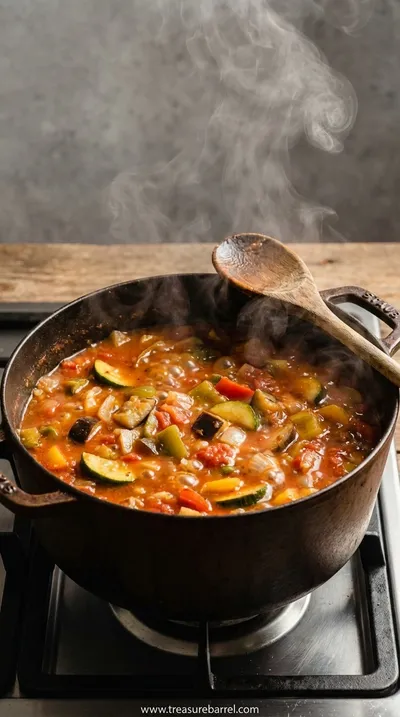
This is where the transformation happens. I add all the chopped vegetables along with the tomatoes, broth, and that bundle of fresh herbs tied with kitchen twine. The pot looks almost too full at first, but as everything starts to soften and meld, the volume reduces and the flavors concentrate. I love watching the colors deepen and blend, the way the tomato liquid turns the broth a rich reddish-orange. It's alchemy, honestly.
-
Don't rush the vegetable cooking – letting them sauté until they develop some color adds incredible depth
-
Taste and adjust seasoning at the end – the flavors change as they simmer
-
Let the soup rest for 15 minutes off heat before serving – it allows everything to settle
Pro Tips
These little touches make such a difference in taking the soup from good to truly memorable. The resting time especially lets the herbs infuse more deeply and gives the vegetables time to absorb the broth properly.
 Warm Meals
Beef Ragu Pasta Recipe in Tomato Sauce
A rich and hearty pasta dish with slow-cooked beef ragu in a savory tomato sauce.
The Perfect Bowl
Serving this soup is part of the ritual for me. I warm our bowls first – there's nothing sadder than hot soup hitting a cold bowl. Then I ladle it generously, making sure each portion gets a good mix of all the vegetables. A final drizzle of really good olive oil and maybe some fresh basil if I have it makes it feel special. Sometimes I'll float a crusty bread round on top for dipping, which soaks up the broth in the most satisfying way.
You Must Know
-
This soup freezes beautifully for up to 3 months
-
The flavor improves dramatically if made a day ahead
-
Don't skip salting the eggplant – it changes the texture completely
Frequently Asked Questions
→ Can I make this soup ahead of time?
Absolutely, and honestly it might even be better that way. The flavors have time to marry and deepen when the soup sits overnight in the refrigerator. I often make it on a Sunday afternoon for the week ahead. Just reheat gently on the stove – don't boil it vigorously, as that can break down the vegetables too much. The texture might soften a bit more, but the trade-off in flavor complexity is so worth it.
→ What's the best way to freeze this soup?
Let the soup cool completely first – I usually spread it out in a thin layer in a baking sheet to speed up the cooling process. Then portion it into freezer-safe containers, leaving about an inch of space at the top for expansion. I like to freeze some individual portions for quick lunches, and family-size portions for easy dinners. It keeps beautifully for about 3 months, and thawing it slowly in the refrigerator overnight gives the best results.
→ Can I add other vegetables to this recipe?
Oh, definitely! This soup is wonderfully adaptable. I've added mushrooms when I had them needing to be used, yellow squash instead of zucchini, even some chopped kale added at the very end for extra nutrition. The key is to consider cooking times – harder vegetables like carrots should go in earlier, while delicate greens should be added at the end. It's a great way to clean out the vegetable drawer, honestly.
→ What if I don't have fresh herbs?
While fresh herbs really make this soup special, dried will work in a pinch. Use about one-third the amount of dried herbs compared to fresh, and add them earlier in the cooking process so they have time to rehydrate and release their flavors. That said, if you can get just one fresh herb, make it thyme – it's the backbone of the flavor profile and makes such a difference.
→ How can I make this soup more substantial?
Sometimes I add white beans during the last 10 minutes of cooking for extra protein and heartiness. Chickpeas work beautifully too. If you're looking for a complete meal, serving it over a scoop of creamy polenta or with a side of crusty bread makes it really satisfying. It's also wonderful with a grilled cheese sandwich for dipping – comfort food perfection.
→ Is this soup gluten-free?
Yes, as written it's naturally gluten-free. Just be sure to check your vegetable broth label if that's a concern, as some brands may contain gluten. All the vegetables, herbs, and seasonings are gluten-free, making this a wonderful option for anyone with dietary restrictions. I often make it for friends with celiac disease and everyone enjoys it equally.
→ What's the best way to reheat leftovers?
Gently on the stove is always best – microwave can make the vegetables a bit mushy. Add a splash of water or broth if it seems too thick after refrigeration. I sometimes find the flavors need a little brightening after reheating, so a squeeze of lemon juice or a fresh sprinkle of herbs right before serving makes all the difference. It's amazing how a little fresh element can wake up leftover soup.
→ Can I make this in a slow cooker?
Definitely! Sauté the onions and garlic first to build flavor, then transfer everything to the slow cooker. Cook on low for 6-8 hours or high for 3-4 hours. The vegetables will be incredibly tender this way. It's perfect for days when you want dinner waiting for you, and the house smells amazing when you walk in. Just be careful not to overcook – check towards the end so the vegetables don't turn to complete mush.
Nutrition Facts
per serving
180
Calories
4g
Protein
28g
Carbs
7g
Fat
Taste Profile
Savory and herbaceous with natural vegetable sweetness
Ingredient Substitutions
Don't have an ingredient? Try these alternatives
The flavor profile may change slightly but will still be delicious
If using bouillon, adjust salt accordingly as it can be quite salty
Recipe Variations
Try these delicious twists on the original
White Bean Addition
Add 2 cups cooked white beans during the last 10 minutes of cooking for extra protein and heartiness
Spicy Version
Include a pinch of red pepper flakes with the garlic or finish with a drizzle of chili oil
Common Mistakes to Avoid
Learn from others' mistakes for perfect results
- Overcooking vegetables until mushy
- Not salting eggplant first (affects texture)
- Using dried herbs instead of fresh (changes flavor profile)
- Skipping the resting time before serving
Meal Prep & Storage
Make Ahead Tips
This soup is perfect for making ahead – in fact, it might be even better the next day. You can prepare it up to 3 days in advance and store it in the refrigerator. The flavors have time to meld and deepen beautifully. When ready to serve, reheat gently on the stove, adding a splash of broth if it's thickened too much. You can also prep all the vegetables a day ahead and store them separately in airtight containers in the refrigerator. This makes the actual cooking process much quicker when you're ready to make the soup. The herb bundle can be prepared in advance as well. For meal prep purposes, this soup freezes exceptionally well. Portion it into individual containers for easy lunches or family-sized portions for quick dinners. It's one of those recipes that actually improves with time, making it ideal for busy weeks.
Leftover Ideas
Leftovers of this soup are truly wonderful – often even better than the first serving. The flavors continue to develop and harmonize in the refrigerator. I love having it for lunch the next day, sometimes thinning it slightly with extra broth if it's thickened. You can also repurpose leftovers in creative ways: use it as a sauce over pasta or polenta, or reduce it further to make a vegetable spread for sandwiches. I've even used it as a base for a quick vegetable stew by adding some cooked beans or lentils. The soup keeps well in the refrigerator for up to 5 days, and reheats beautifully. Just be gentle when reheating – low and slow on the stove preserves the texture of the vegetables better than aggressive boiling.
Perfect Pairings
Serve this with...
Cooking Timeline
Prep all vegetables and salt eggplant
Sauté onions, garlic, and eggplant
Add remaining vegetables and cook briefly
Add liquids and herbs, simmer covered
Rest off heat before serving

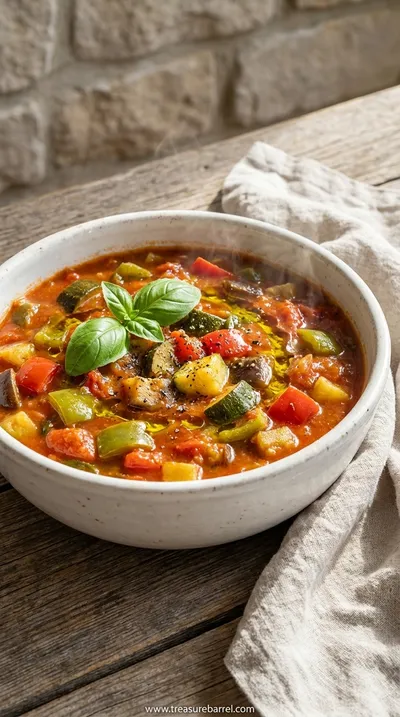
Remi's Ratatouille Soup Recipe
Cozy vegetable soup inspired by Provence, perfect for chilly evenings.
Timing
Prep Time
20 Minutes
Cook Time
40 Minutes
Total Time
60 Minutes
Recipe Details
Ingredients
Soup Base
-
01
3 tablespoons olive oil
-
02
1 large onion, chopped
-
03
4 cloves garlic, minced
-
04
1 medium eggplant, cubed
-
05
2 zucchini, sliced into half-moons
-
06
1 red bell pepper, chopped
-
07
1 yellow bell pepper, chopped
Liquid & Seasonings
-
01
1 (28-ounce) can San Marzano tomatoes
-
02
4 cups vegetable broth
-
03
1 teaspoon fresh thyme leaves
-
04
1 sprig fresh rosemary
-
05
2 bay leaves
-
06
Salt and black pepper to taste
-
07
Fresh basil for garnish
Instructions
Start by prepping all your vegetables – this is my favorite part, honestly. Chop the onion, mince the garlic, cube the eggplant into generous chunks, slice the zucchini into half-moons, and dice the bell peppers. I like to keep everything in separate little piles on my cutting board, admiring the colors before they all come together. Sprinkle the eggplant with salt and let it sit for about 20 minutes – this draws out excess moisture and any bitterness. Then pat it dry with paper towels. Meanwhile, tie the thyme, rosemary, and bay leaves together with kitchen twine for easy removal later.
Heat the olive oil in a large heavy pot over medium heat. Add the chopped onion and sauté until it turns soft and translucent, about 5-7 minutes. You'll know it's ready when the kitchen starts smelling sweet and the onions have lost their sharp bite. Add the minced garlic and cook for just another minute until fragrant – be careful not to let it brown, as burnt garlic can make the whole soup bitter. This foundation is what builds the deep flavor base for everything that follows.
Now add the eggplant cubes and cook until they start to soften and take on some color, about 8-10 minutes. They'll absorb the oil at first but then release it back as they cook. Then add the zucchini and bell peppers, stirring everything together. Let the vegetables cook for another 5 minutes until they begin to soften but still have some bite. The colors at this stage are just beautiful – all these different hues mingling together in the pot.
Pour in the canned tomatoes – I like to crush them with my hands as I add them for a rustic texture. Add the vegetable broth and the herb bundle. Bring everything to a gentle simmer, then reduce the heat to low, cover, and let it bubble away for about 25-30 minutes. The vegetables should be tender but not mushy. Remove the herb bundle, season with salt and pepper to taste, and let it rest off the heat for 15 minutes before serving. This resting time allows the flavors to meld beautifully.
Notes & Tips
-
1
Salting the eggplant first is optional but makes a big difference in texture
-
2
The soup thickens as it sits – add more broth when reheating if needed
-
3
Freezes beautifully for up to 3 months
-
4
Tastes even better the next day as flavors develop

Tools You'll Need
-
A good sturdy pot makes all the difference for even heating and preventing burning. I use my enameled cast iron Dutch oven that I've had for years – it distributes heat so beautifully and holds temperature perfectly for the long simmering time.
-
A sharp knife makes prepping all these vegetables such a pleasure rather than a chore. I keep mine honed regularly and love the feeling of clean cuts through eggplant and zucchini. Safety tip: always curl your fingers under when chopping!
-
I prefer a large wooden board that gives me plenty of space to organize my prepped vegetables. There's something satisfying about seeing all the colorful piles before they go into the pot.
-
For the herbs and seasonings – though honestly, I often measure herbs with my heart rather than spoons. But for consistency, especially when you're first making the recipe, proper measuring helps.
-
A good ladle makes serving so much easier, especially getting those beautiful vegetable chunks into each bowl evenly. I have an old wooden one that feels nice in the hand.
-
For tying the herb bundle together so you can remove it easily later. If you don't have twine, you can just add the herbs loose and fish them out, but the bundle method is much cleaner.
Must-Know Tips
-
Don't overcrowd the vegetables - Cook in batches if needed for proper browning
-
Taste as you go - Seasoning needs change as soup reduces
-
Let soup rest before serving - Flavors meld beautifully during this time
Professional Secrets
-
Use best quality olive oil - It makes a difference in flavor
-
Crush tomatoes by hand - Creates better texture than canned crushed
-
Resting time is crucial - Allows flavors to harmonize completely

Recipe by
Amelia RoseAmelia cooks hearty meals 🥘🔥, sharing warmth 💛 and cozy evenings 🕯️🍲. Every dish she makes is full of love ❤️ and family laughter 👩👩👧👦🍛.
Get Delicious Recipes Weekly
Join 25,000+ home cooks getting our best recipes straight to their inbox.
Free forever • No spam • Unsubscribe anytime