Tanghulu – Chinese Candied Fruit Recipe
A simple, sweet treat of candied fruit on a stick with a bright, crackling sugar coating.
- Lila Grace
- Sweet Treats
- February 14, 2026
- 3 min read
- Updated November 5, 2026
- Total time
- 35 min
- Servings
- 4 Servings
- Difficulty:
- Medium
Table of contents
I remember sitting at a night market as a child, watching the vendor pull glistening sticks of fruit from a bubbling pot. Honestly, the scent of caramelized sugar still lingers when I make tanghulu at home. It’s a quiet ritual—boiling, dipping, letting the glaze set—and the result is a treat that feels both simple and magical.
The essence of the dish
A balance of natural fruit sweetness with a thin, crackling sugar crust that catches the light like tiny jewels.
A fun fact or historical angle
During the Lantern Festival, vendors would display twinkling tanghulu to attract families, turning the snack into a festive lantern of flavor.
Flavor or sensory focus
You’ll notice the fresh bite of fruit first, then the immediate snap of caramelized sugar that melts slowly on the tongue.
You Must Know
- Sugar must reach hard‑crack; otherwise the glaze stays sticky.
- Dry fruit surface is key for adhesion.
- Work quickly—once the glaze sets, it’s too hard to coat.
These details keep the experience consistent. I’ve learned that a little patience with the syrup pays off, turning ordinary fruit into a show‑stopping treat. Even if a glaze cracks, it still tastes delightful, and you can always try again tomorrow. The process is forgiving, and that’s what makes it perfect for family kitchens.
The story behind it
Tanghulu, also known as bǐngguǒ tánghuǒ, dates back to the Qing dynasty when street vendors first offered candied hawthorn on slender wooden sticks. The treat quickly became a symbol of festive joy, especially during the Lantern Festival. Its glossy appearance and crisp bite have made it a beloved snack across generations, crossing regional borders without losing its comforting simplicity.
Why You'll Love It
- Minimal ingredients, maximum nostalgia
- Crispy glaze that shatters delightfully
- Versatile fruit choices for any season
- Easy to make with pantry staples
Tips for success
- Don’t stir once the syrup starts bubbling; it can cause crystals.
- Keep a bowl of cold water nearby to test the hard‑crack stage.
- Make sure fruit is completely dry; moisture prevents the glaze from setting.
Professional secrets
- Use filtered water for a crystal‑clear glaze.
- Add a few drops of lemon juice to inhibit crystallization.
- Dip quickly and let excess drip; a thinner coat gives a crisper bite.
Common mistakes to avoid
- Stirring the syrup after it starts bubbling, which can cause crystals.
- Using wet fruit; moisture prevents the glaze from adhering.
- Waiting too long to dip, causing the syrup to harden.
Substitutions
- Strawberries: Mango chunks or pineapple wedges. Adjust dipping time; softer fruit may need a gentler hand.
- Granulated sugar: Coconut sugar. Will give a deeper, caramel tone and a slightly opaque glaze.
Variations
- Spicy Version: Add a pinch of chili powder to the sugar syrup for a subtle heat that balances the sweetness.
- Mediterranean Style: Dip figs in the glaze and sprinkle with toasted sesame seeds and a drizzle of honey.
Storage
Place in an airtight container on a cool shelf; eat within two days for the best crunch.
Make ahead
You can skewer the fruit and store it in the fridge for up to 12 hours; just keep the sticks dry and dip when ready to glaze.
Leftovers
Reheat gently in a skillet over low heat to revive the crisp shell, or enjoy as‑is for a softer texture.
Serving ideas
- Arrange sticks on a decorative plate for a visual treat.
- Pair with a cup of fragrant tea to cleanse the palate.
- Garnish with a dusting of powdered sugar for extra sparkle.
- Serve at gatherings as a nostalgic snack that invites conversation.
Allergy information
Contains fruit; ensure no personal fruit allergies before serving.
Tanghulu – Chinese Candied Fruit Recipe
A simple, sweet treat of candied fruit on a stick with a bright, crackling sugar coating.
- Prep time
- 15 min
- Cook time
- 20 min
- Total time
- 35 min
- Difficulty
- Medium
- Cuisine
- Chinese
- Course
- Dessert
Ingredients
Main Ingredients
For the Sugar Syrup
Instructions
- 1
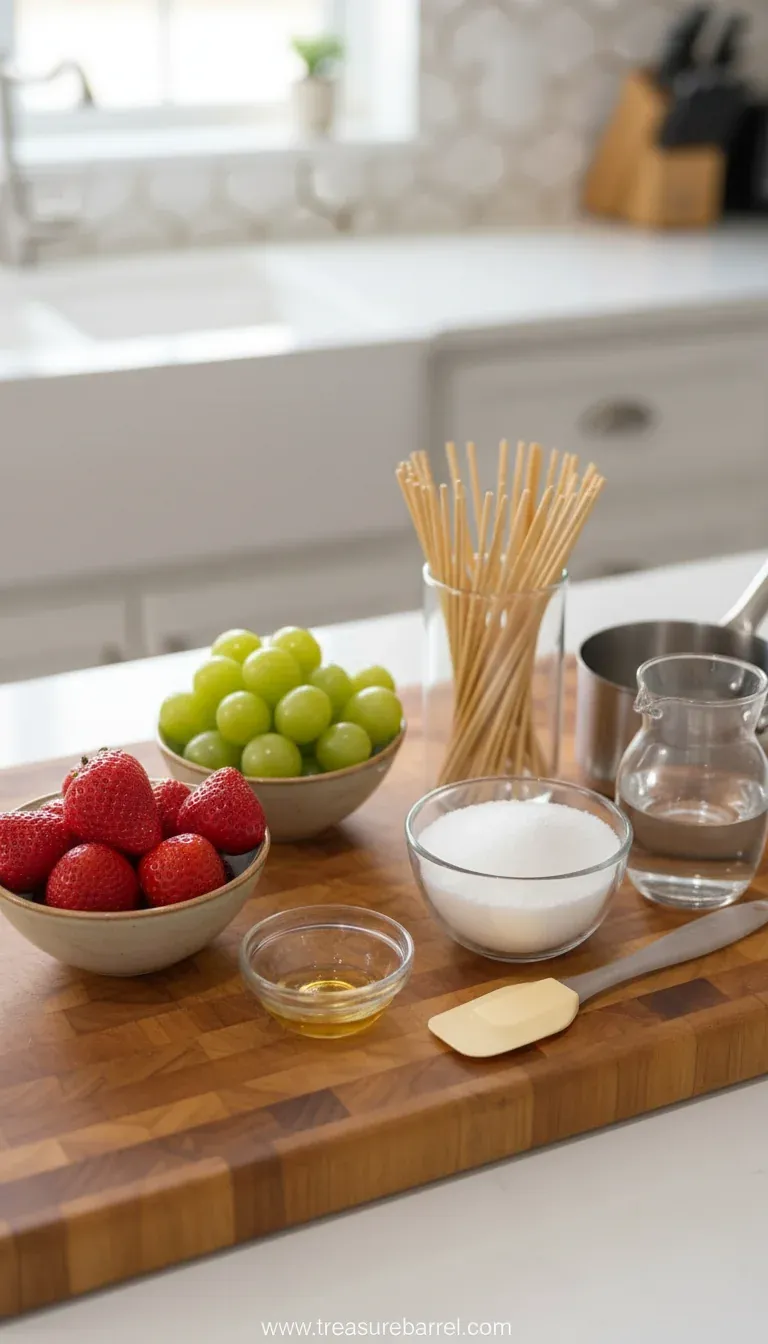
Pat the fruit completely dry, then thread each piece onto a soaked wooden stick, leaving a little space between pieces.
- 2
In a medium saucepan, combine 2 cups sugar, ½ cup water, and lemon juice. Heat over medium, stirring until sugar dissolves, then stop stirring.
- 3
Allow the mixture to boil until it reaches a hard‑crack stage (about 300°F). You’ll notice it turning a deep amber; that’s the moment.
- 4
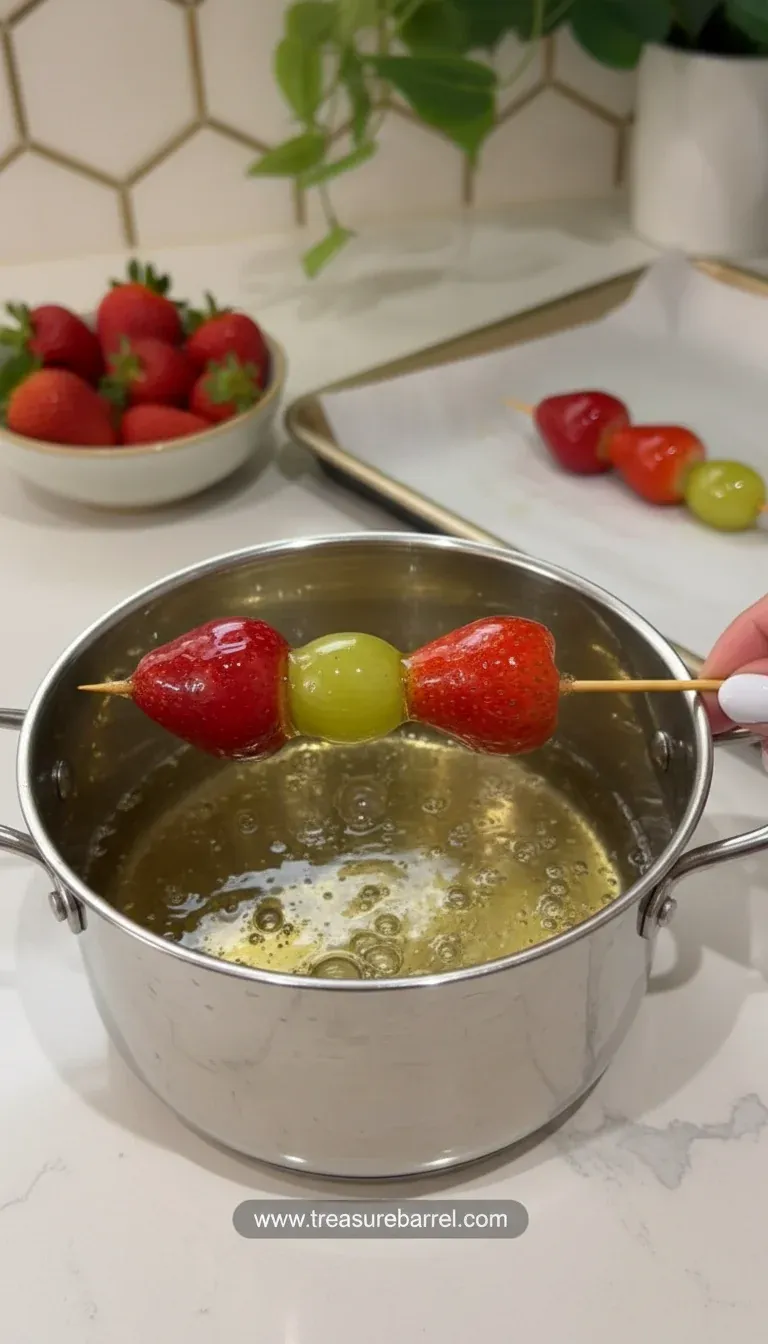
Quickly dip each fruit‑skewered stick into the hot syrup, allowing excess to drip back into the pan. Place on parchment paper to set.
- 5
If desired, sprinkle a pinch of sea salt or crushed pistachios over the glaze while it’s still tacky. Let the tanghulu cool for 10‑15 minutes before serving.
Nutrition per serving
- 180 kcal
- Calories
- 2 g
- Protein
- 45 g
- Carbs
- 0 g
- Fat
Tips & notes
- Work in small batches; the syrup hardens fast. - If the glaze clouds, it means the temperature dropped—re‑heat gently. - For extra sparkle, dust the finished sticks with edible glitter.
Frequently asked questions
Can I use frozen fruit?
It’s best to use fresh fruit; frozen fruit releases water, which prevents the glaze from hardening properly.
What fruit works best?
Strawberries, grapes, and kiwi are classic, but you can experiment with apple slices or pineapple chunks.
How do I achieve a clear glaze?
Avoid stirring the syrup once it starts boiling and use pure white sugar with filtered water.
Can I add flavor to the glaze?
A thin drop of vanilla extract or a pinch of ginger powder can be added after boiling, just before dipping.
Is it safe for kids to handle hot sugar?
Adult supervision is essential; the syrup reaches over 300°F, so let the glaze cool slightly before dipping.
How long does it keep?
Store in an airtight container for up to two days; the glaze may soften slightly but remains tasty.