
I remember the first time I made a proper beef stew. It was a drizzly Sunday, the kind where the sky is a soft, uniform grey and the windows are all fogged up. I was in my first little apartment, with a tiny kitchen and a mismatched set of pots. I wanted to create something that felt… established, something that felt like home. I found a classic French recipe, but I didn't have any wine and, honestly, I preferred not to use it. So I started experimenting. I added a little balsamic for that tangy depth and focused on getting a really good, dark sear on the beef. When it was finally ready, hours later, the meat was so tender it practically melted. It was rich, deep, and so satisfying. That day, ladling that stew into a bowl, I felt like I had finally learned a secret language of cooking – the language of patience and care. It’s been a staple in my home ever since, evolving slightly over the years but always holding that same memory of a quiet, rainy Sunday and the feeling of creating comfort from scratch.
Why You'll Adore This Stew
-
Incredibly Tender Beef: The slow-simmering process is where the magic happens. It takes a humble cut of beef and transforms it into something so succulent and fall-apart tender that you barely need a knife. It’s a texture that feels so luxurious and satisfying.
-
Deep, Rich Flavor (No Wine Needed!): We build layers of flavor from the ground up—searing the beef, caramelizing the onions, using a rich beef broth and a touch of balsamic. The result is a gravy that is so complex and savory, you get all that classic French depth without a single drop of alcohol.
-
A True One-Pot Wonder: Everything happens in a single, heavy-bottomed pot, which I just love. It feels so elemental, and the cleanup is refreshingly simple. It makes the whole process feel less like a chore and more like a gentle, creative act in the kitchen.
-
The Ultimate Comfort Food: This is the meal I turn to when I need to feel grounded and cared for. The aroma, the warmth, the heartiness… it’s a recipe that feels like a cozy blanket and a good book on a rainy day. It’s perfect for sharing with people you love.
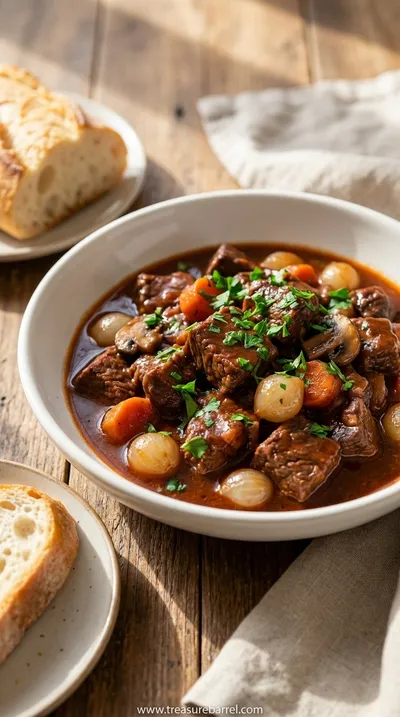
This stew is pure comfort in a bowl. It’s so rich and flavorful, you’d never guess it’s made without wine!
Essential Ingredient Guide
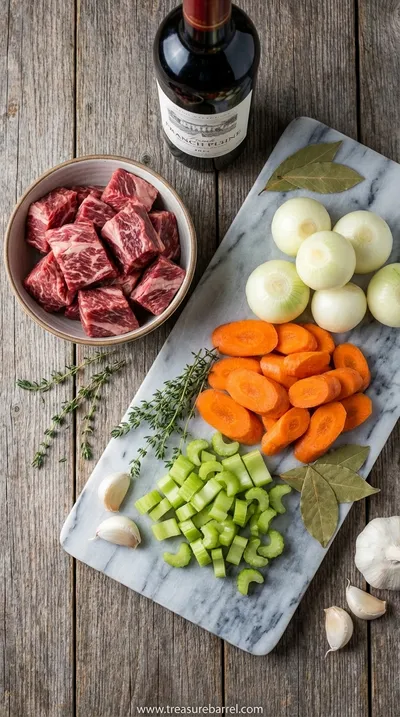
- Beef Chuck: Please, please don't be tempted by leaner cuts for this stew. Beef chuck is your best friend here. It has beautiful marbling of fat and connective tissue that breaks down during the long, slow cook, making the meat incredibly moist and tender while enriching the gravy. Look for a piece with good, even marbling and cut it into generous 1.5 to 2-inch cubes. This ensures it won’t fall apart completely, leaving you with lovely, substantial bites.
- Aromatic Vegetables (Mirepoix): The classic trio of onion, carrots, and celery is the heart of this stew's flavor base. Don't rush this step. Allowing them to soften and lightly caramelize in the beef drippings coaxes out their natural sweetness, which balances the savory notes of the dish. I like to cut my carrots into nice, chunky pieces so they hold their shape and offer a sweet, tender bite in the final stew.
- Good-Quality Beef Broth: Since we aren't using wine, the beef broth is doing a lot of the heavy lifting for the flavor of our gravy. If you can, use a low-sodium, high-quality beef stock or bone broth. It makes a world of difference. It provides a richer, more authentic beef flavor that you just can't get from bouillon cubes or lower-quality brands. It’s the soul of the stew, so it's worth choosing a good one.
 Family Favorites
Meat Lovers Pizza Casserole Recipe
A comforting baked dish that brings pizza night flavors together in one easy casserole.
Complete Cooking Process
-
Searing the Beef:
This first step is honestly the most important for developing that deep, foundational flavor. You’re not trying to cook the beef through, but rather to create a gorgeous, dark brown crust on all sides. This process, called the Maillard reaction, creates hundreds of new flavor compounds. Don't crowd the pan! Do it in batches to give each piece of beef enough space to truly sear rather than steam. The little browned bits left in the pot, the 'fond', are pure gold—that's where the gravy's amazing flavor begins.
-
Building the Gravy:
After the beef is seared and set aside, you’ll add your aromatic vegetables to the pot. They'll soften and start to release their moisture, which helps you scrape up all those flavorful browned bits from the bottom of the pot. Then, you'll stir in the flour, letting it cook for a minute to get rid of any raw taste. This is what will thicken your stew into a luscious, velvety gravy. Slowly whisking in the broth ensures you have a smooth, lump-free base for everything to simmer in.
-
The Slow Simmer:
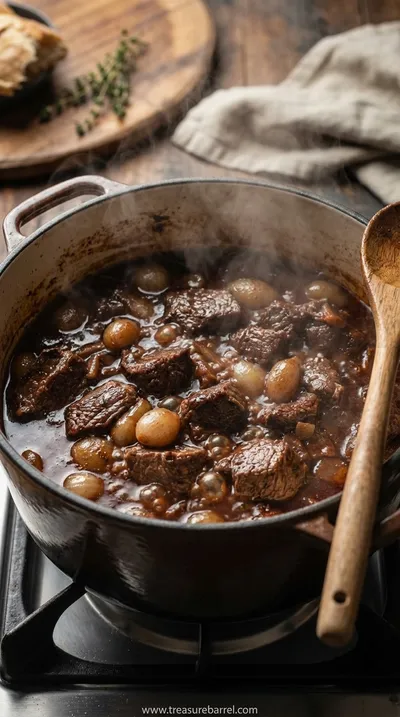
Now for the easy part: patience. Once everything is back in the pot and the liquid is gently bubbling, you’ll cover it and let it do its thing. A low, gentle simmer is key. A rolling boil will make the meat tough, which is the opposite of what we want. This long, slow cook is what allows the beef to become incredibly tender and for all the individual flavors to meld together into a single, harmonious dish. The house will start to smell absolutely amazing during this time. For a nice afternoon snack while you wait, you could whip up some super easy banana bread.
-
Pat the Beef Dry: Use paper towels to pat your beef cubes completely dry before searing. Moisture is the enemy of a good crust, so this step is crucial for getting that beautiful browning.
-
Don't Skip the Flour: Tossing the beef in seasoned flour not only helps with browning but is also the first step in thickening your gravy. It creates a beautiful texture.
-
Low and Slow is the Way to Go: Resist the urge to crank up the heat to speed things up. The magic of a good stew is in the long, gentle simmer. It’s what makes the meat so tender.
Pro Tips for Success
Just trust the process. It's a quiet, slow recipe that rewards patience with the most incredible flavor and texture.
 Warm Meals
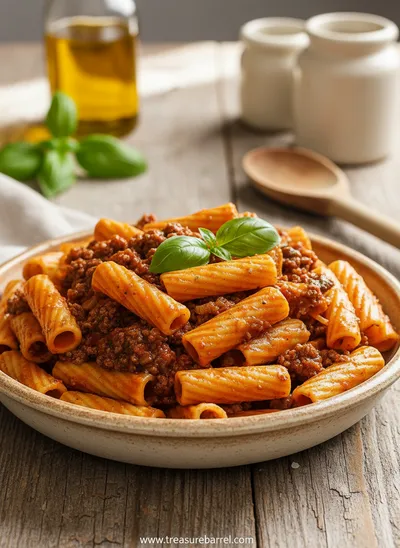
Beef Ragu Pasta Recipe in Tomato Sauce
A rich and hearty pasta dish with slow-cooked beef ragu in a savory tomato sauce.
Frequently Asked Questions
→ Can I make this beef stew in a slow cooker?
Yes, you absolutely can, and it's a wonderful way to do it. You'll still want to do the initial steps on the stovetop—searing the beef and sautéing the vegetables—because that's where all the flavor is built. Once you've done that, transfer everything to your slow cooker. Cook on low for 6-8 hours or on high for 3-4 hours. The beef should be perfectly tender. It's a great option for a day when you want to come home to a finished dinner.
→ What's the best cut of beef for stew?
My absolute favorite is beef chuck. It has the perfect amount of fat and connective tissue that melts down over a long cooking time, making the meat so incredibly tender and flavorful. Other good options include bottom round or brisket, but chuck is really the gold standard for a reason. Avoid lean cuts like sirloin, as they will tend to get dry and tough in a stew.
→ How do I get a thick, rich gravy without it being pasty?
The key is a couple of little tricks. First, cooking the flour in the pot for a minute or two after you add it helps to cook out the raw, pasty flavor. Second, make sure you're using a good, flavorful beef broth as your base. Lastly, letting the stew simmer uncovered for the final 30 minutes can help it reduce and thicken naturally. If it's still not as thick as you like, you can make a small slurry of cornstarch and cold water and stir it in at the end.
→ My stew tastes a little flat. How can I brighten the flavor?
Ah, a great question! Sometimes a long-simmered dish just needs a little lift at the end. My secret weapon is a splash of acidity. A teaspoon of balsamic or even apple cider vinegar stirred in right before serving can wake everything up beautifully. Fresh herbs, like parsley, are also wonderful for adding a final burst of freshness. Don't underestimate a little finishing touch!
→ What can I serve with this beef stew?
So many wonderful things! My favorite is creamy mashed potatoes to soak up all that delicious gravy. Crusty bread is also a must for dipping. Other lovely options are egg noodles, polenta, or even just a simple side of steamed green beans. For dessert, something simple and comforting like the best banana bread is just perfect. The whole meal feels like a warm hug.
→ Can I add other vegetables to the stew?
Of course! This recipe is a great canvas. Mushrooms are a classic addition; I'd sauté them after the onions and carrots. Potatoes are also wonderful – add cubed potatoes about an hour before the stew is done so they don't turn to mush. Parsnips, turnips, or even frozen peas stirred in at the very end are also delicious. Feel free to make it your own.
→ How long will the stew last in the fridge?
Beef stew is one of those magical dishes that often tastes even better the next day! The flavors have more time to meld and deepen. You can store it in an airtight container in the refrigerator for up to 4 days. Just reheat it gently on the stovetop over low heat until it's warmed through. This gives you time to make something else fun, like cinnamon swirl banana bread for brunch.
→ Can I freeze this beef stew?
Yes, it freezes beautifully. Let the stew cool completely, then transfer it to freezer-safe containers or bags, leaving a little bit of room for expansion. It will keep well in the freezer for up to 3 months. To serve, thaw it overnight in the refrigerator and then reheat gently on the stovetop. It's a wonderful meal to have on hand for a busy night.
Nutrition Facts
per serving
580
Calories
45g
Protein
20g
Carbs
35g
Fat
Taste Profile
Deeply savory and rich with a slight tang from balsamic, highlighting the natural sweetness of carrots and caramelized onions.
Ingredient Substitutions
Don't have an ingredient? Try these alternatives
To make it gluten-free, you can skip dredging the beef in flour. Instead, thicken the stew at the end with a slurry made from 2 tablespoons of cornstarch mixed with 3 tablespoons of cold water.
We're looking for a bit of acidity to cut through the richness. Red wine vinegar works well, or pomegranate juice can add a nice, fruity depth similar to wine.
Recipe Variations
Try these delicious twists on the original
Herbed Dumpling Topping
For an even heartier meal, you can make simple herbed dumplings and drop them on top of the stew during the last 20 minutes of cooking. Cover the pot and let them steam until they're cooked through.
Root Vegetable Medley
Feel free to swap or add other root vegetables. Chunks of parsnip add a lovely sweetness, while small new potatoes can be added in the last hour of cooking to make it a true one-pot meal.
Common Mistakes to Avoid
Learn from others' mistakes for perfect results
- Crowding the Pan: When searing the beef, doing too much at once will steam the meat instead of browning it. This means you miss out on the deep, foundational flavor. Always sear in batches.
- Simmering Too Vigorously: A rolling boil will result in tough, dry meat, even after hours of cooking. The simmer should be very gentle, with only a few bubbles breaking the surface every few seconds.
- Not Cooking Long Enough: The main cause of tough stew meat is not giving it enough time. It needs that long, slow cook for the connective tissue to break down into tender gelatin. Be patient!
- Forgetting to Scrape the Pot: The browned bits (fond) at the bottom of the pot after searing are packed with flavor. Forgetting to scrape them up when you add your liquid is a huge missed opportunity.
Meal Prep & Storage
Make Ahead Tips
This stew is an excellent candidate for making ahead. In fact, the flavor is often even better on the second day as the ingredients have more time to meld. You can prepare the entire dish one to two days in advance, cool it completely, and store it covered in the refrigerator. Reheat it gently on the stovetop over low heat. You can also do the prep work—chopping all the vegetables—a day ahead and store them in an airtight container in the fridge to save time.
Leftover Ideas
Leftover beef stew is such a treat! Store it in an airtight container in the fridge for up to 4 days. It reheats beautifully on the stove. You can also get creative with the leftovers: serve it over toast for a hearty open-faced sandwich, or shred the beef and use it as a filling for savory pies. The rich gravy and tender meat are versatile and delicious in many forms. After a few days of stew, a change of pace like a super simple banana bread can be a welcome sweet treat.
Perfect Pairings
Serve this with...
Cooking Timeline
Prep all ingredients: cube and flour the beef, chop all the vegetables.
Sear the beef in batches until deeply browned on all sides. Set aside.
Sauté the mirepoix (onions, carrots, celery), then add garlic and tomato paste.
Deglaze the pot with beef broth, return the beef, and add seasonings. Bring to a simmer.
Cover and simmer on low heat, allowing the beef to become fall-apart tender.
Uncover for the last 15-30 minutes to thicken the gravy. Sauté mushrooms and add them in. Adjust seasoning and serve.

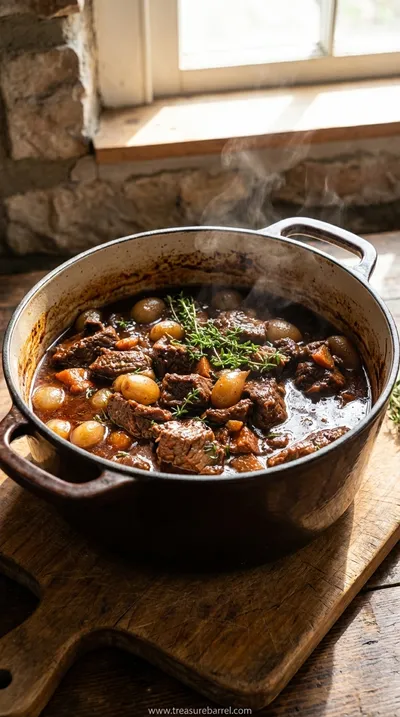
French-Style Beef Stew: Tender & Hearty Recipe
Make this delicious French-style beef stew, a tender and hearty meal perfect for cozy family dinners. Rich flavors without alcohol.
Timing
Prep Time
25 Minutes
Cook Time
2 Hours 30 Minutes
Total Time
2 Hours 55 Minutes
Recipe Details
Ingredients
For the Stew
-
01
3 lbs beef chuck, cut into 1.5 to 2-inch cubes
-
02
1/3 cup all-purpose flour
-
03
1 tsp salt
-
04
1/2 tsp black pepper
-
05
3 tbsp olive oil, divided
-
06
2 medium yellow onions, chopped
-
07
4 large carrots, peeled and cut into 1-inch chunks
-
08
3 celery stalks, cut into 1/2-inch pieces
-
09
4 cloves garlic, minced
-
10
6 cups good-quality low-sodium beef broth
-
11
1 tbsp tomato paste
-
12
1 tbsp balsamic vinegar
-
13
2 bay leaves
-
14
1 tsp dried thyme
-
15
1 lb cremini mushrooms, halved or quartered (optional)
-
16
2 tbsp unsalted butter (for mushrooms)
For Garnish (Optional)
-
01
Fresh parsley, chopped
Instructions
First, let's get our beef ready. Pat the beef cubes completely dry with paper towels – this is so important for getting a good sear. In a bowl, whisk together the flour, salt, and pepper. Add the beef cubes and toss them gently until they're all lightly coated. This little flour coating helps create a beautiful crust and will start the thickening process for our gravy. Set the coated beef aside for a moment while you heat up your pot. I find this little moment of prep so calming; it's the quiet start to something wonderful.
Now for the browning. Heat 2 tablespoons of olive oil in a large Dutch oven or heavy-bottomed pot over medium-high heat. The oil should shimmer slightly when it's ready. Carefully place about half of the beef cubes in the pot in a single layer, making sure not to overcrowd them. Let them sear, undisturbed, for about 3-4 minutes per side, until a deep brown crust forms. Wow, that sizzle and smell is just incredible. Transfer the browned beef to a separate plate and repeat with the remaining beef, adding the last tablespoon of oil if needed. Those browned bits left in the pot are pure gold.
Reduce the heat to medium and add your chopped onions, carrots, and celery to the same pot. There should be enough rendered fat from the beef, but add a little more oil if it looks dry. Sauté the vegetables, stirring occasionally, for about 8-10 minutes, until they've softened and the onions are translucent. As they cook, use your spoon to scrape up all those delicious browned bits from the bottom of the pot. Stir in the minced garlic and cook for just another minute until you can smell its lovely fragrance. Then, stir in the tomato paste and let it cook for a minute to deepen its flavor.
It's time to bring it all together. Slowly pour in the beef broth, whisking as you go to ensure everything is smooth. Stir in the balsamic vinegar, bay leaves, and dried thyme. Return the seared beef and any accumulated juices back to the pot. Give it all a gentle stir. Bring the mixture to a gentle simmer, then reduce the heat to low, cover the pot, and let it cook for at least 2 hours, or until the beef is tender. The low, slow heat is what does all the work. If you are baking something else, like a foolproof banana bread, the whole house will smell heavenly.
If you're adding mushrooms, melt the butter in a separate skillet over medium-high heat. Add the mushrooms and cook until they are nicely browned and their liquid has evaporated, about 5-7 minutes. During the last 30 minutes of the stew's cooking time, you can remove the lid to allow the gravy to thicken a bit more. Stir in the cooked mushrooms (if using) during these last few minutes. Once the beef is fall-apart tender, remove the bay leaves. Taste the stew and adjust the seasoning with more salt and pepper if you think it needs it. Ladle into warm bowls and garnish with fresh parsley. It is a meal that deserves to be savored.
Notes & Tips
-
1
The key to tender beef is a long, slow simmer. Don't rush this process. If after 2 hours your beef isn't as tender as you'd like, just give it another 30 minutes. Different cuts and sizes of beef can vary in cooking time, so just trust your instincts and let it go until it's perfect.
-
2
If you find your gravy is too thin at the end, you can create a slurry by mixing 1 tablespoon of cornstarch with 2 tablespoons of cold water. Whisk this into the simmering stew and let it cook for a couple of minutes until it has thickened to your liking. Conversely, if it's too thick, just stir in a splash more beef broth.
-
3
This stew is a fantastic make-ahead meal. The flavors actually get deeper and more complex overnight. So, if you have the time, making it a day ahead is a wonderful idea for an easy, super flavorful dinner the next day. Sometimes I make a double batch just for this reason.
Tools You'll Need
-
Large Dutch Oven or Heavy-Bottomed Pot: A heavy pot, preferably cast iron, is essential. It distributes heat evenly and retains it well, which is perfect for both searing the beef and maintaining a low, steady simmer for hours without scorching.
-
Cutting Board and Sharp Chef's Knife: A good, sturdy cutting board and a sharp knife make the prep work of chopping all the vegetables and cubing the beef so much more pleasant and safe. It's the foundation of almost every meal I make.
-
Wooden Spoon or Spatula: I love using a wooden spoon for stews. It's sturdy enough to scrape up the flavorful browned bits from the bottom of the pot (the fond) without scratching my Dutch oven. It just feels right for a rustic, slow-cooked meal like this.
-
Tongs: A pair of tongs is incredibly helpful for searing the beef. They allow you to turn each individual piece to ensure it gets browned beautifully on all sides, giving you much more control than a spoon would.
Must-Know Tips
-
Don't Rush the Sear: The flavor foundation is built here. Ensure your pan is hot and your beef is dry. Give each piece space and time to develop a deep, dark brown crust. This step cannot be overstated—it's what makes the gravy rich and complex.
-
Deglaze with Purpose: When you add the broth, take a moment to scrape the bottom of the pot with a wooden spoon. All those caramelized, stuck-on bits are concentrated flavor that will dissolve into your gravy, making it incredibly delicious.
-
Taste Before Serving: Always taste your stew at the very end. It might need a little more salt, a grind of black pepper, or a tiny splash of vinegar to brighten everything up. Your palate is the final judge.
Professional Secrets
-
A Touch of Tomato Paste: Cooking off a tablespoon of tomato paste with the aromatics adds a subtle, savory depth and a touch of sweetness known as umami. It gives the gravy a beautiful color and a richness you can't quite put your finger on.
-
Let It Rest: If you have the patience, letting the stew cool slightly before serving for about 15-20 minutes can make a big difference. It allows the gravy to thicken up a bit more and the flavors to settle and meld even further.
-
Fresh Herbs at the End: While dried herbs are great for the long simmer, finishing the dish with a sprinkle of fresh, chopped parsley adds a burst of bright, clean flavor and color that lifts the whole dish. It's a simple touch that makes it feel complete.

Recipe by
Amelia RoseAmelia cooks hearty meals 🥘🔥, sharing warmth 💛 and cozy evenings 🕯️🍲. Every dish she makes is full of love ❤️ and family laughter 👩👩👧👦🍛.
Get Delicious Recipes Weekly
Join 25,000+ home cooks getting our best recipes straight to their inbox.
Free forever • No spam • Unsubscribe anytime